In one line
25 wordsA bullet hell where the enemy is silence: tame the wild notes into the jam you write, and fight off the rests that want silence.
Everything on this page may be used freely in coverage of Roguestorm Beats.
Please note: Roguestorm Beats is still in development. Everything on this page (the art, the screenshots, the numbers and the fact sheet) is from a build in progress, and any of it may change before final release.
Full-game collection. All clothing and accessories are cosmetic; purchases use Fans earned through play.

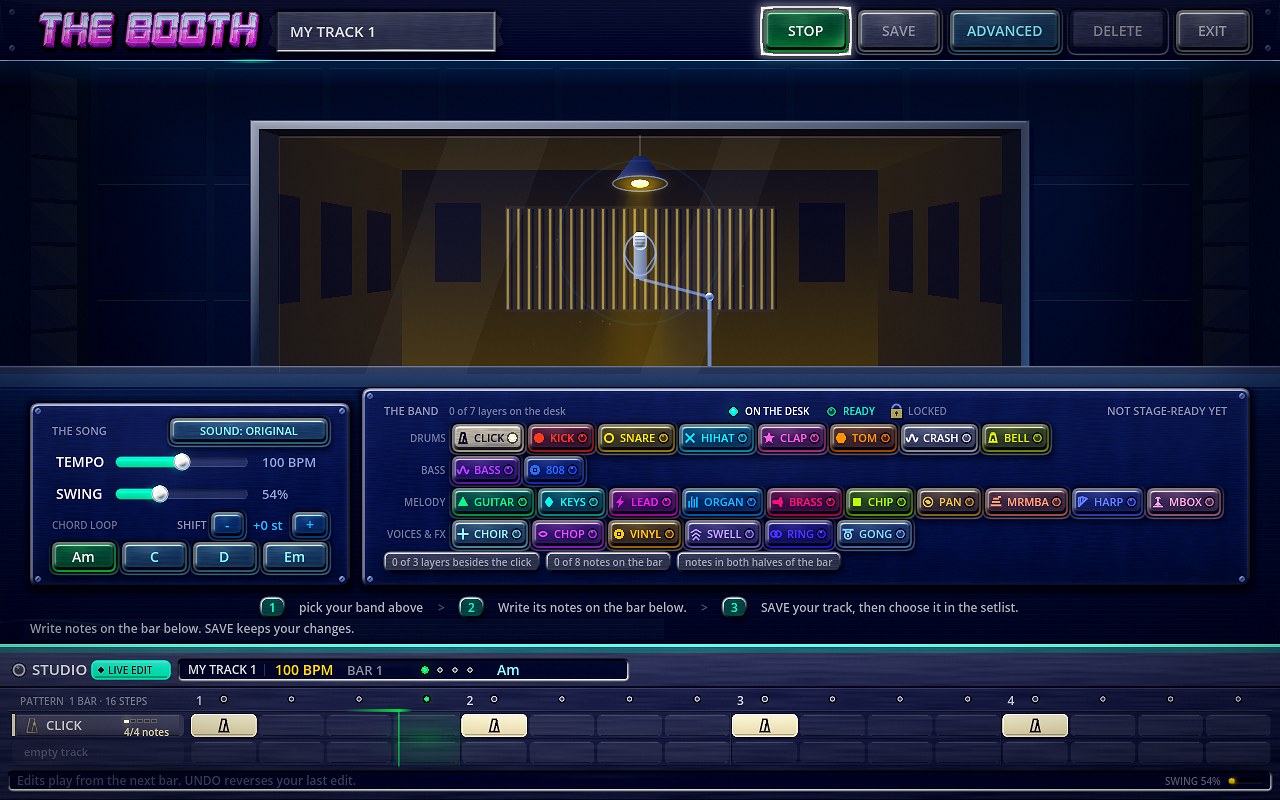
Your weapon is the jam you write, and the Booth is where you write it cold: no combat, the world frozen, the full desk open.
Every track starts on an empty bar with the click track alone on it. Click a layer into the band and it plays from the next bar. Click a step on its row and that note plays as music and fires as an attack every time the playhead crosses it. Set the chord loop a bar at a time, the key, the tempo and the swing, and the whole desk follows.
SAVE puts the track on your shelf, up to eight of them. Three layers besides the click, eight notes and notes in both halves of the bar make it stage-ready, and a stage-ready track is in rotation: from then on a night can draw your track exactly as it draws a house song.
PLAY IT performs it. Level-ups offer only your layers, and every note you earn lands where you wrote it. Nothing is exported and nothing is downloaded: the song lives in the career you keep playing.
In the whole game the desk opens once your career reaches the LOCAL VENUE. In the demo it is open from the first day and grows with the kit, so composing is the demo's long game rather than a prize at the end of it.

The same description at three lengths, to paste. The counts in it are read off the build, so what is here is what this build has.
A bullet hell where the enemy is silence: tame the wild notes into the jam you write, and fight off the rests that want silence.
Roguestorm Beats is a music-powered bullet-hell roguelite. Tame wild notes into a beat that fights for you. Keep the crowd roaring, trigger THE DROP, collect gear and climb from the practice room to the world stage. Between shows, write original tracks and make your performer your own. Play the demo.
In Roguestorm Beats, your music is your weapon. Tame wild notes and build a live sequencer one note at a time, turning drums, bass, guitars and synths into attacks against the Rests that want silence. Keep the crowd with you, build heat and trigger THE DROP for a full-band slam. Between shows, write original tracks in the Booth, fit found gear to your songs and shape your Power Chords in the Gear Room. Choose your performer, mix clothing and accessories, and spend earned Fans on your collection. Book bigger gigs and climb from the practice room to the world stage.

Full-size originals as the game renders them. Take the whole kit in one file, or pick what you want; every download says what it is and how big it is first, and the archive carries a manifest with every caption on this page.
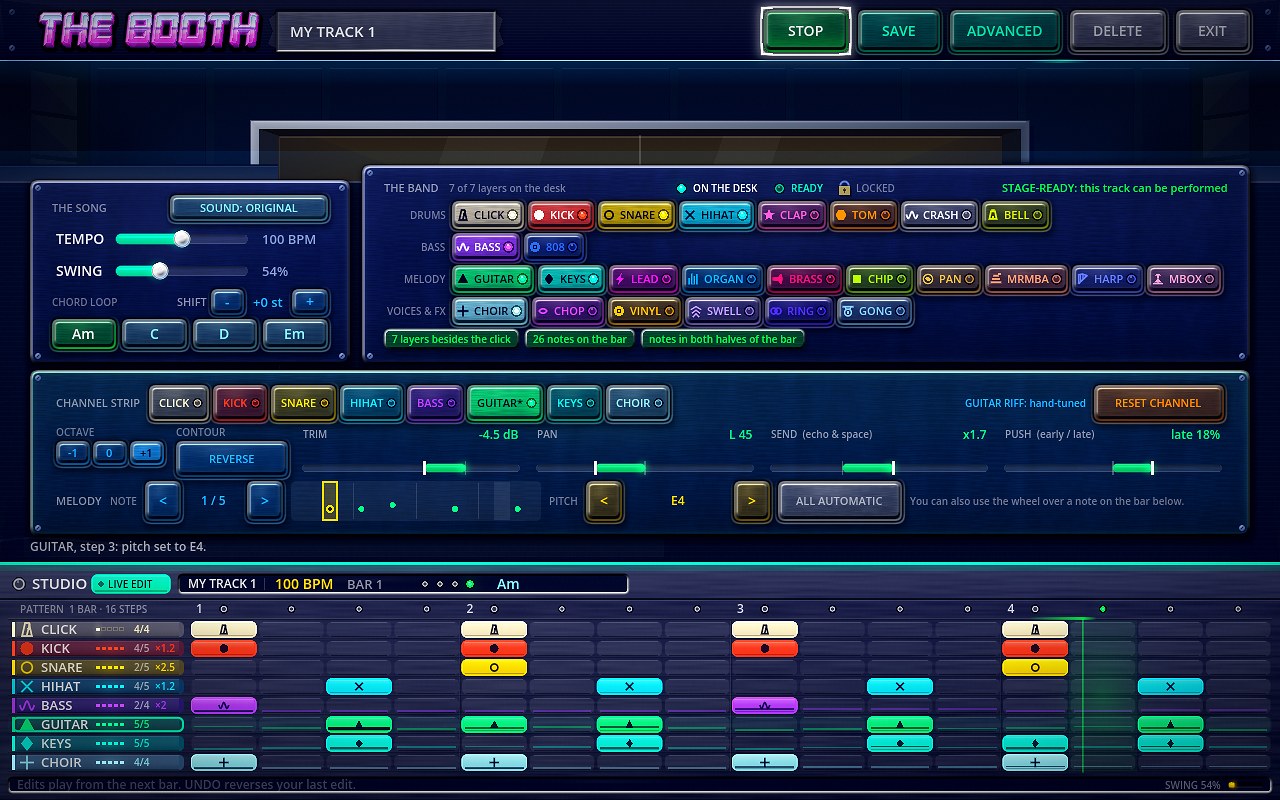
Write your own beat in the refreshed Booth: the empty desk, a saved arrangement, and the channel strip.
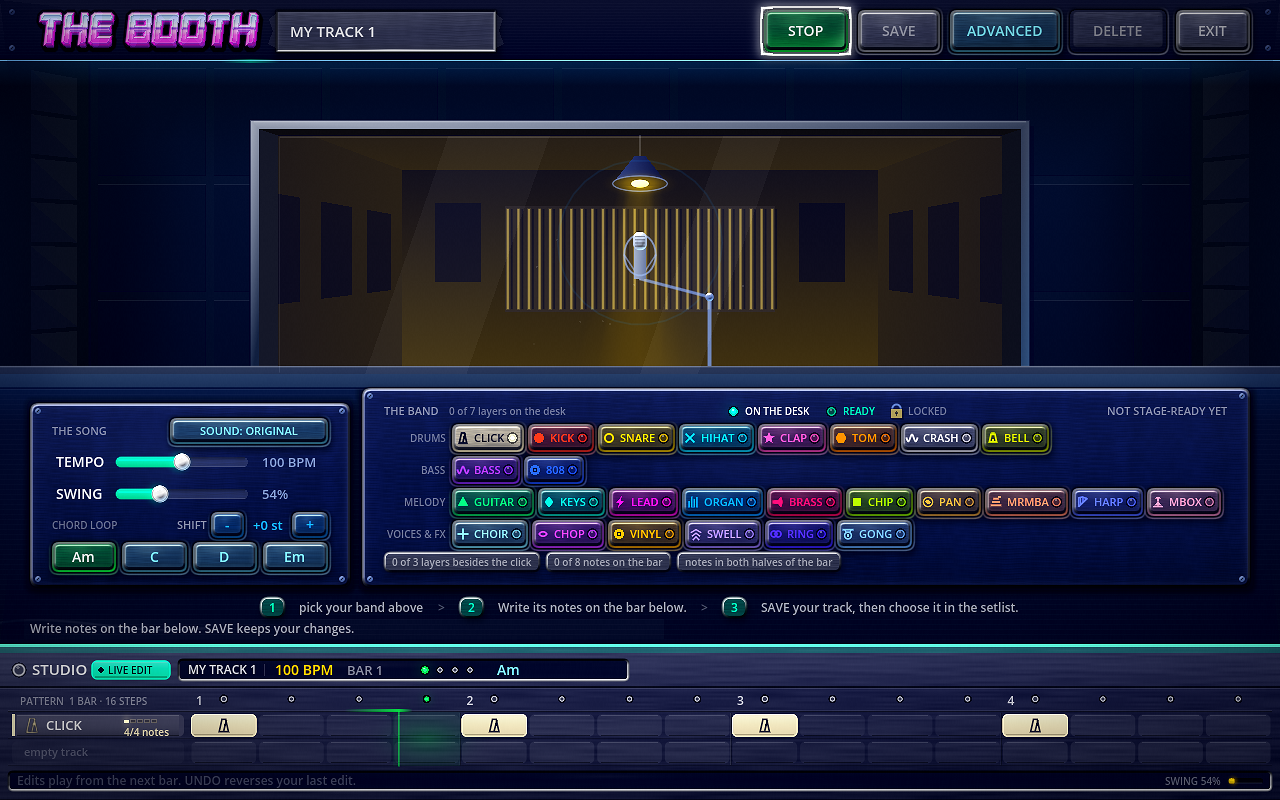
Where every track starts: the click track alone on the bar, the whole kit lit on the palette, and the three-step coach under it.
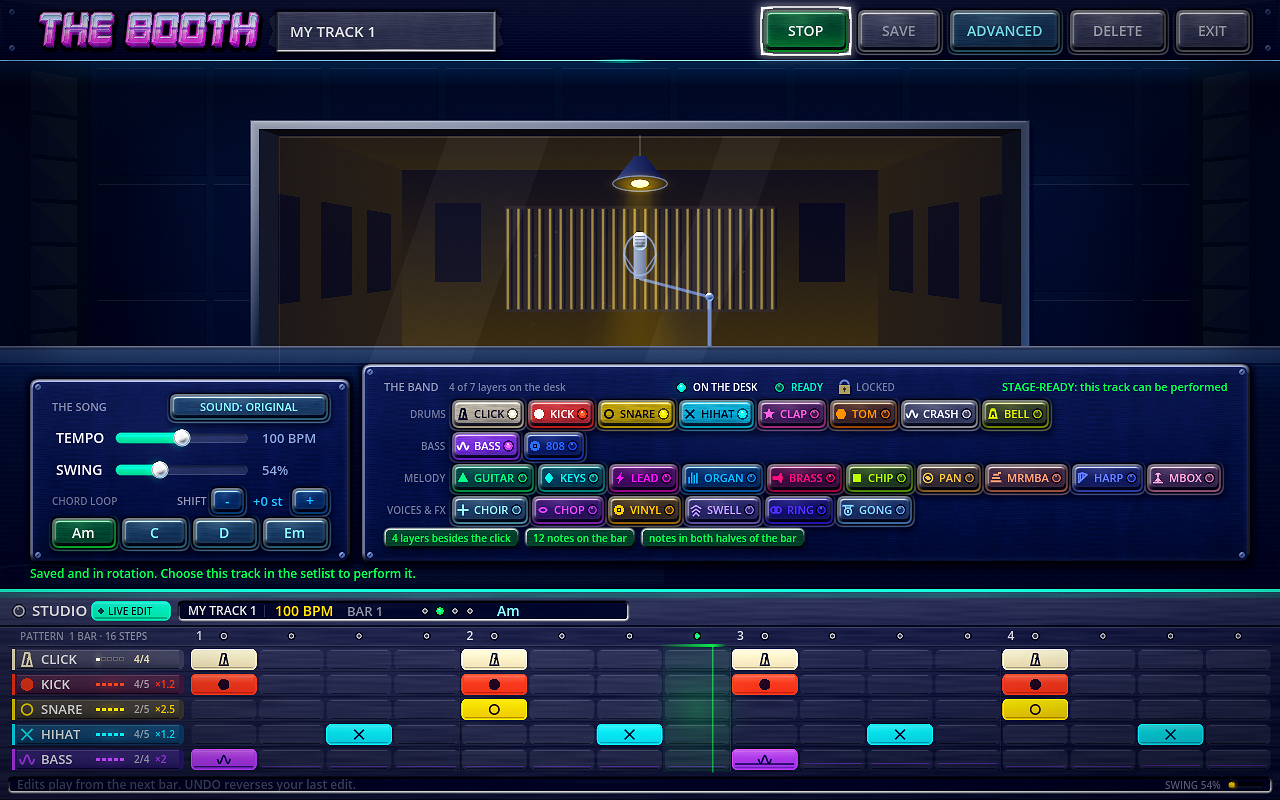
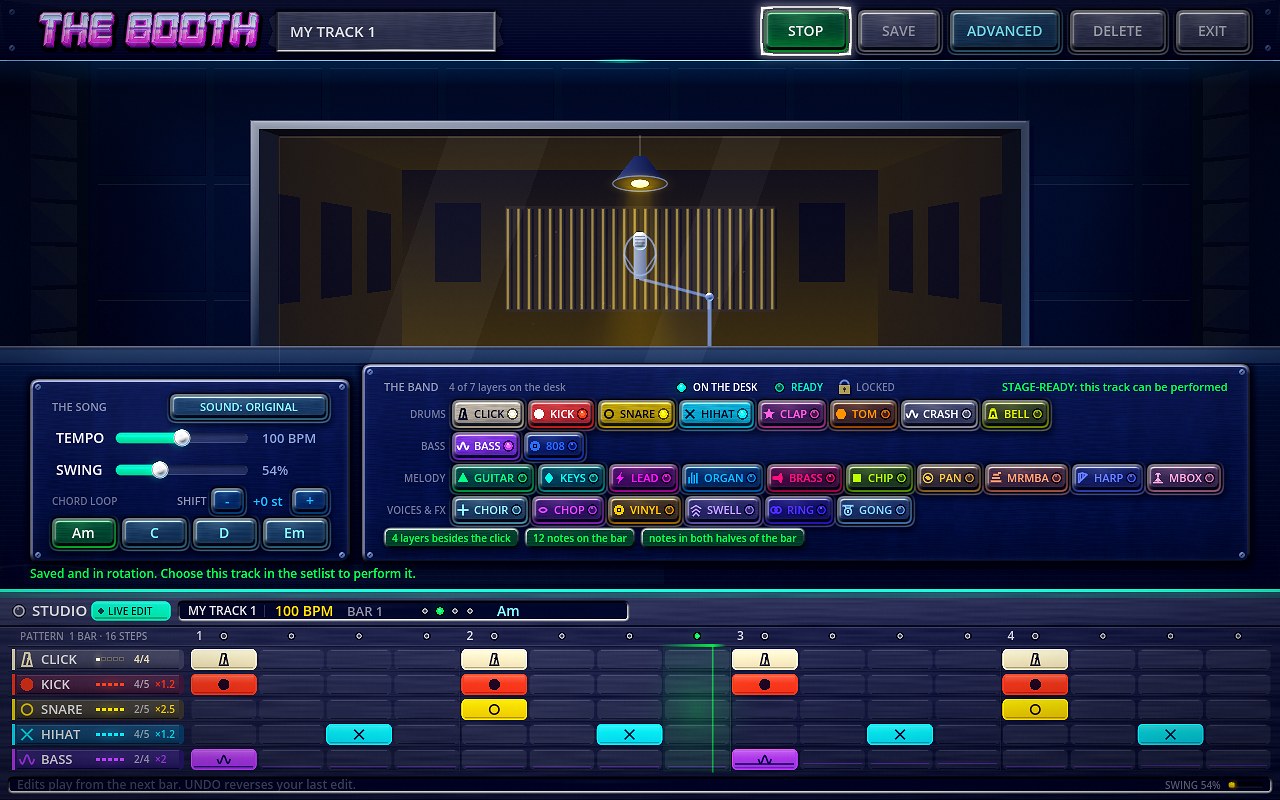
The same desk with four layers clicked into the band and twelve notes on the bar: a kick on the floor, a snare on two and four, hats between the beats and a bass line under them. Saved, and reading STAGE-READY.
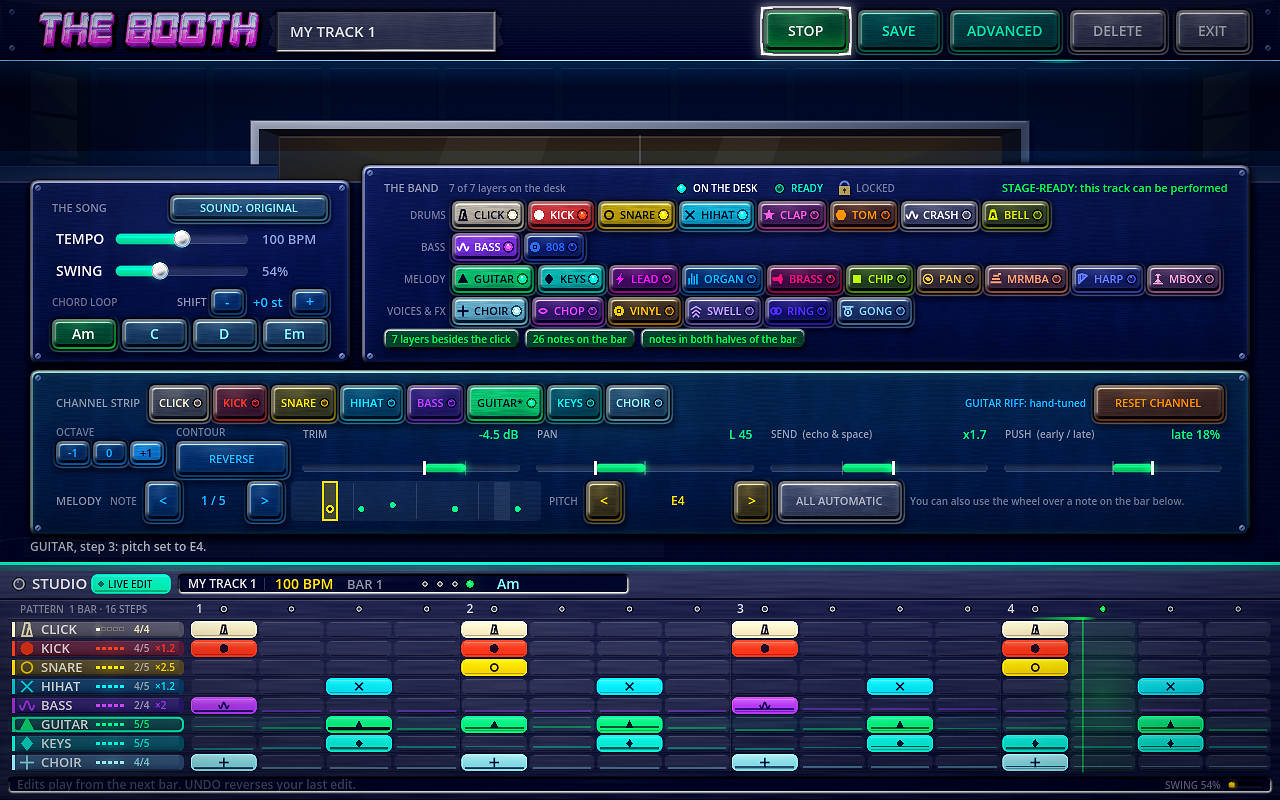
ADVANCED hands over what the game was deciding: each layer's contour through the chord, its octave, trim, pan, send and timing push, and a pitch written onto any single note. Audio only; every attack still fires the step you wrote.
The title page photographed at every shape a page might want it, all from the one painting.
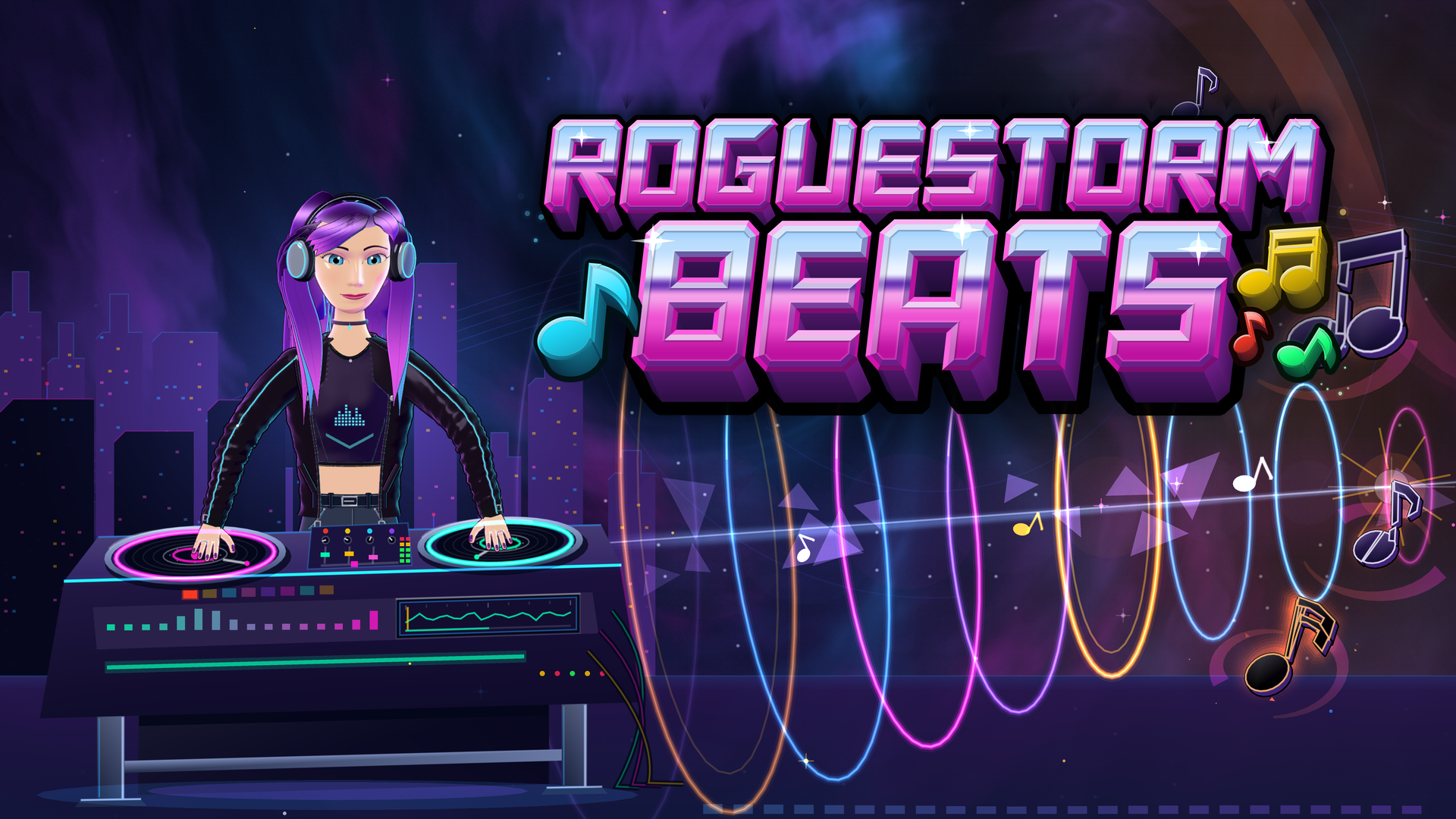
The title page, photographed: Nova at the deck, the sign, and the notes the beat throws.
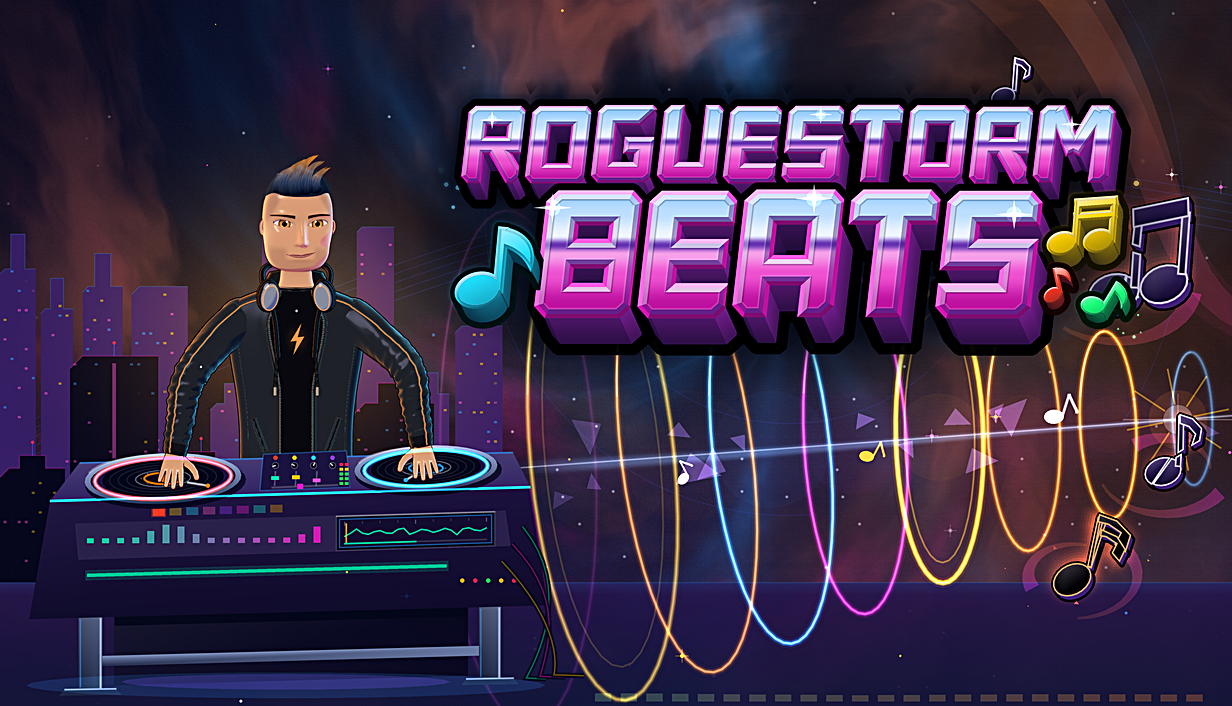
The same poster fronted by the other DJ. The game opens on one or the other, turn and turn about.
The wide one-sheet with no name on it, for a headline or a logo of your own to sit over.
The square cut, for a feed.
The upright cut, for a column or a phone.
The letterbox cut, for a header.
Current gameplay and backstage screenshots: build a beat, battle the Rests, hit THE DROP, and make your performer your own.
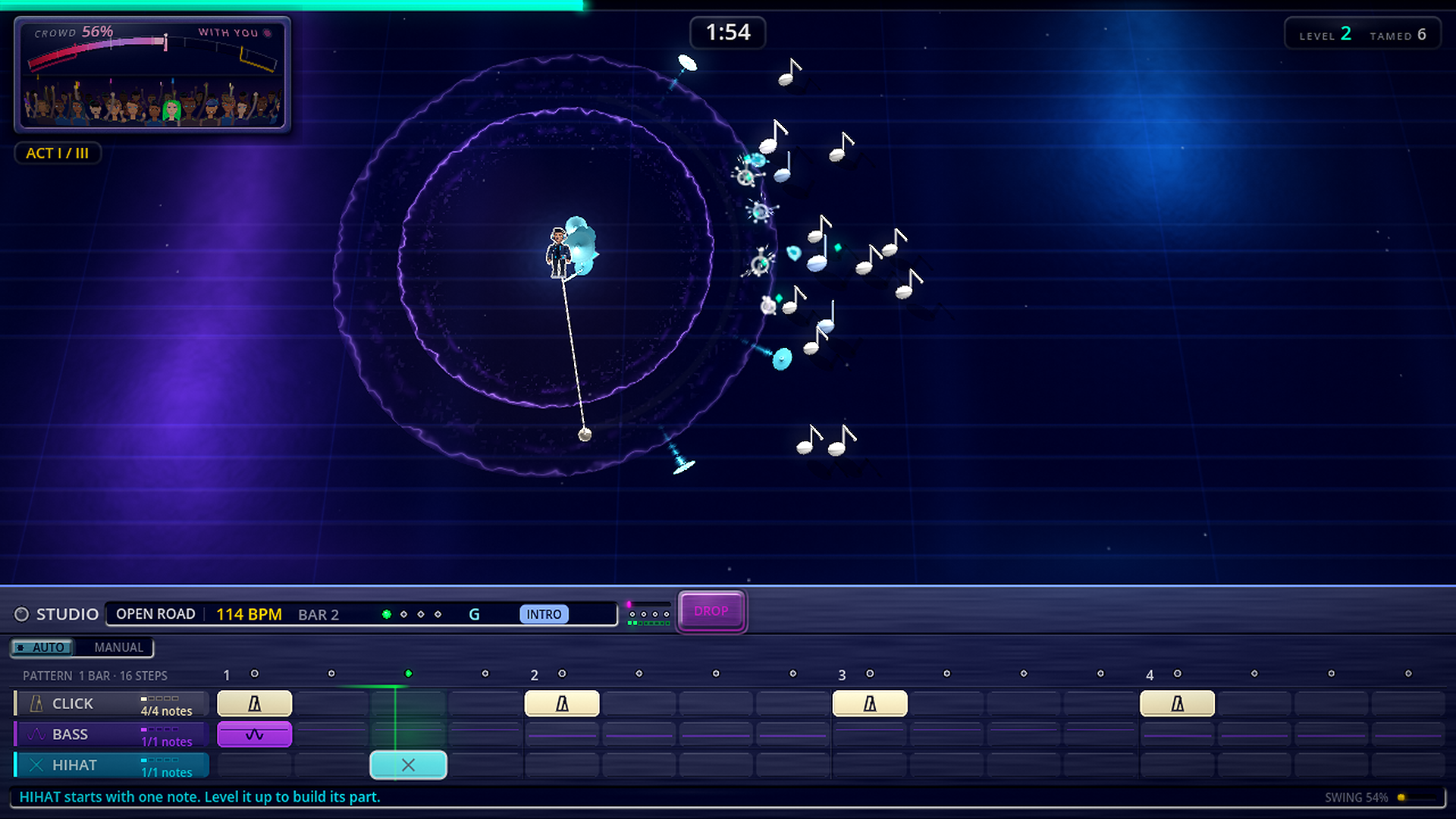
Act I, a minute in: the click track and a bass line are the whole desk, the bass's slow wave rolling out around the player while the first wild notes drift in. The crowd meter at the top left is the only health bar there is.
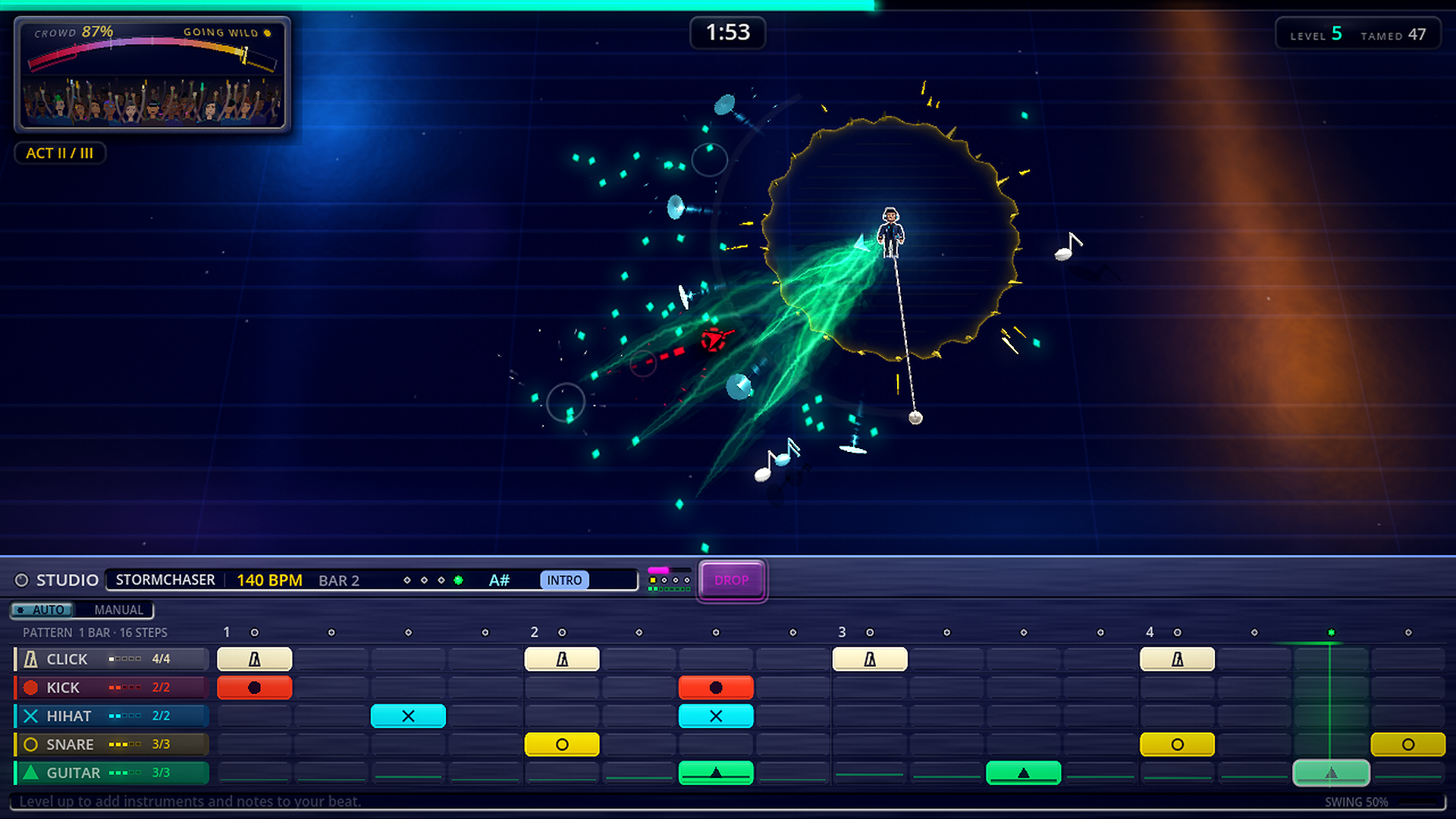
Act II: five layers on the bar, each bought with one level-up, and the guitar's cone of spikes firing on the step it was written on. The desk fills one note at a time while the floor gets busier.
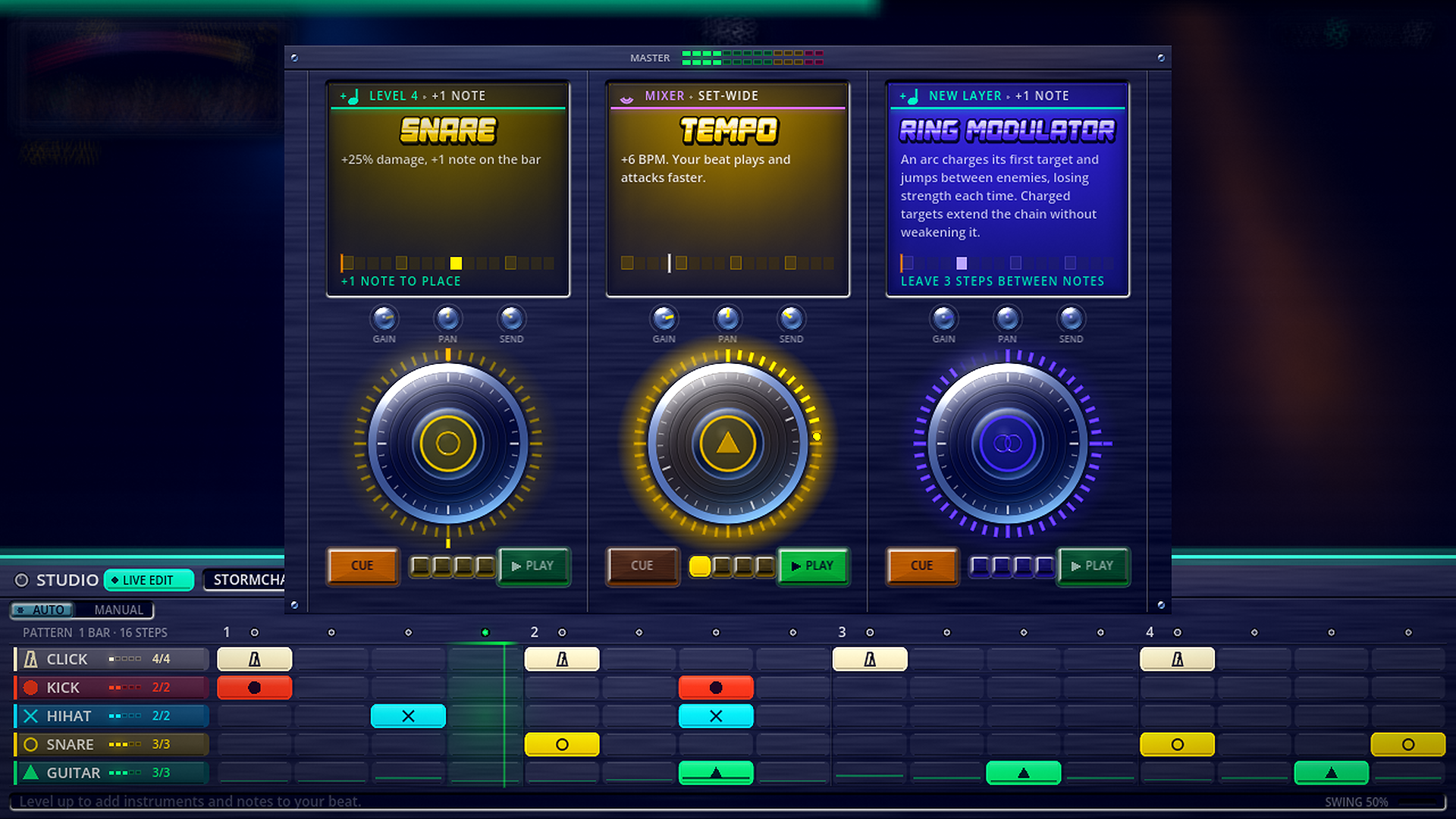
A level-up: three cards to hear before you choose, a mixer card among the layers, and the bar still editable behind them while the world waits.
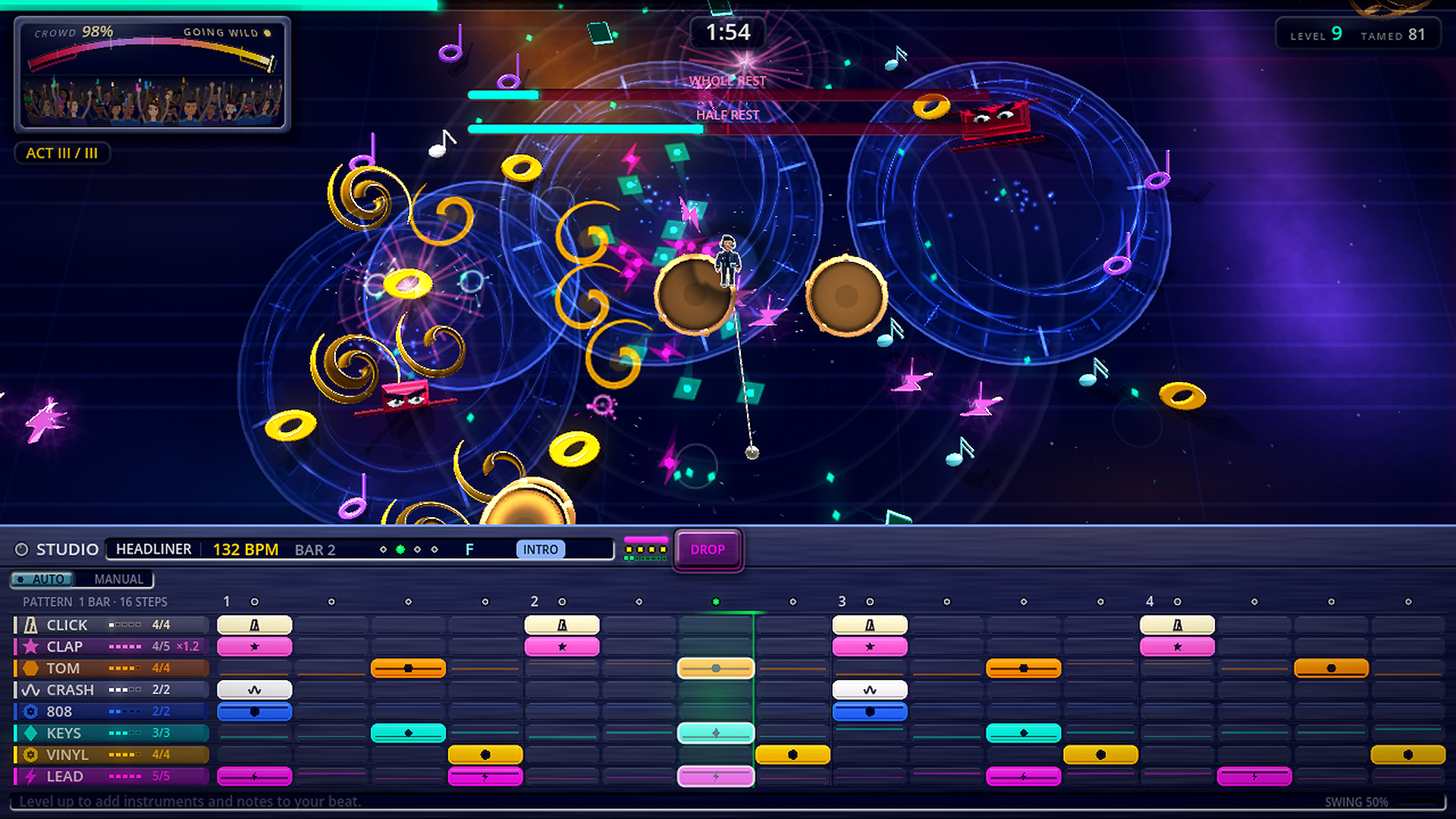
Act III: seven layers firing at once, the tom's bouncing drums and the 808's crater against a whole rest and a half rest, silence with guns, walking on to close the show.
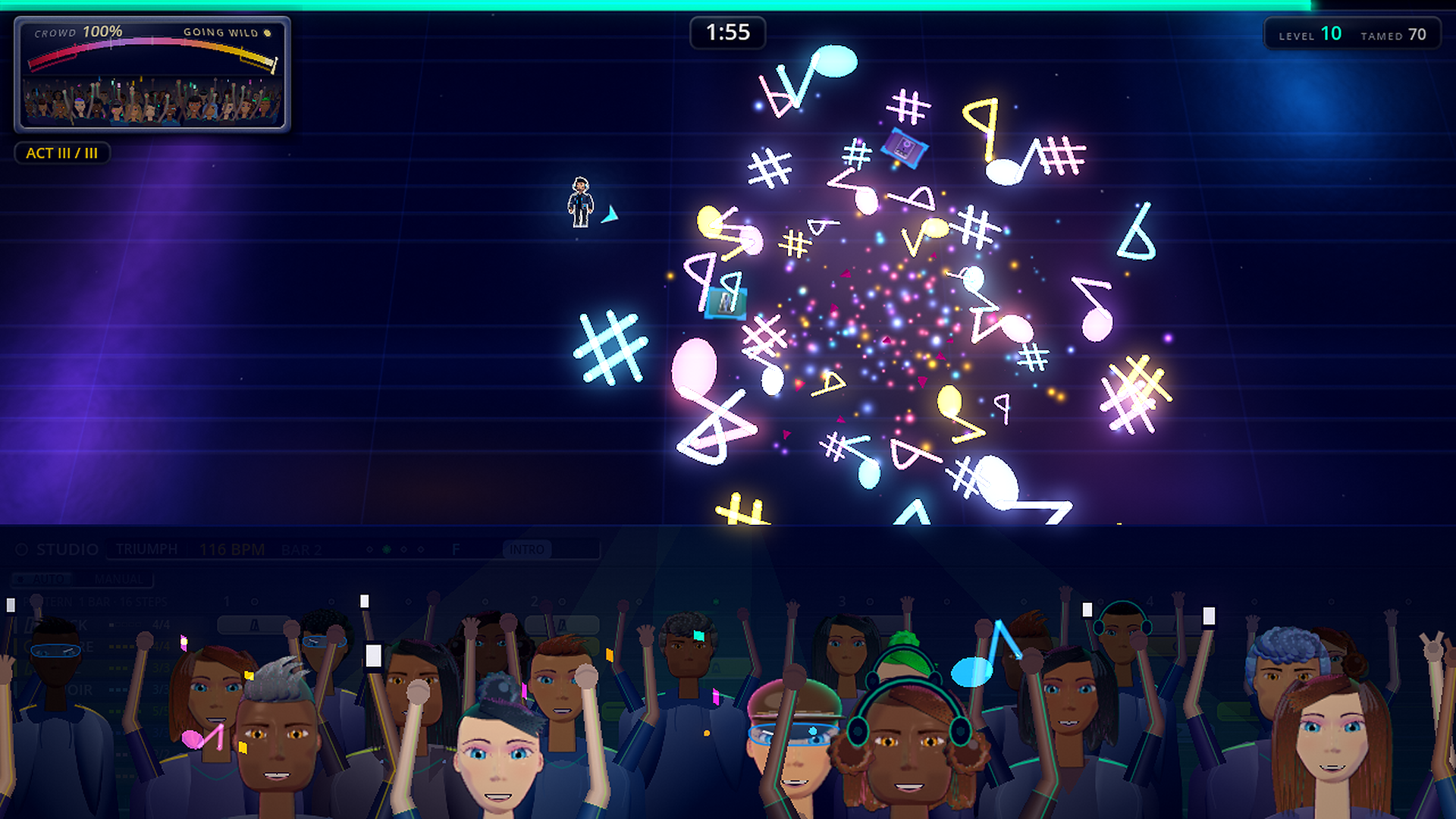
The show closed: the last rest bursting into the notes it was sitting on, and the crowd on its feet.
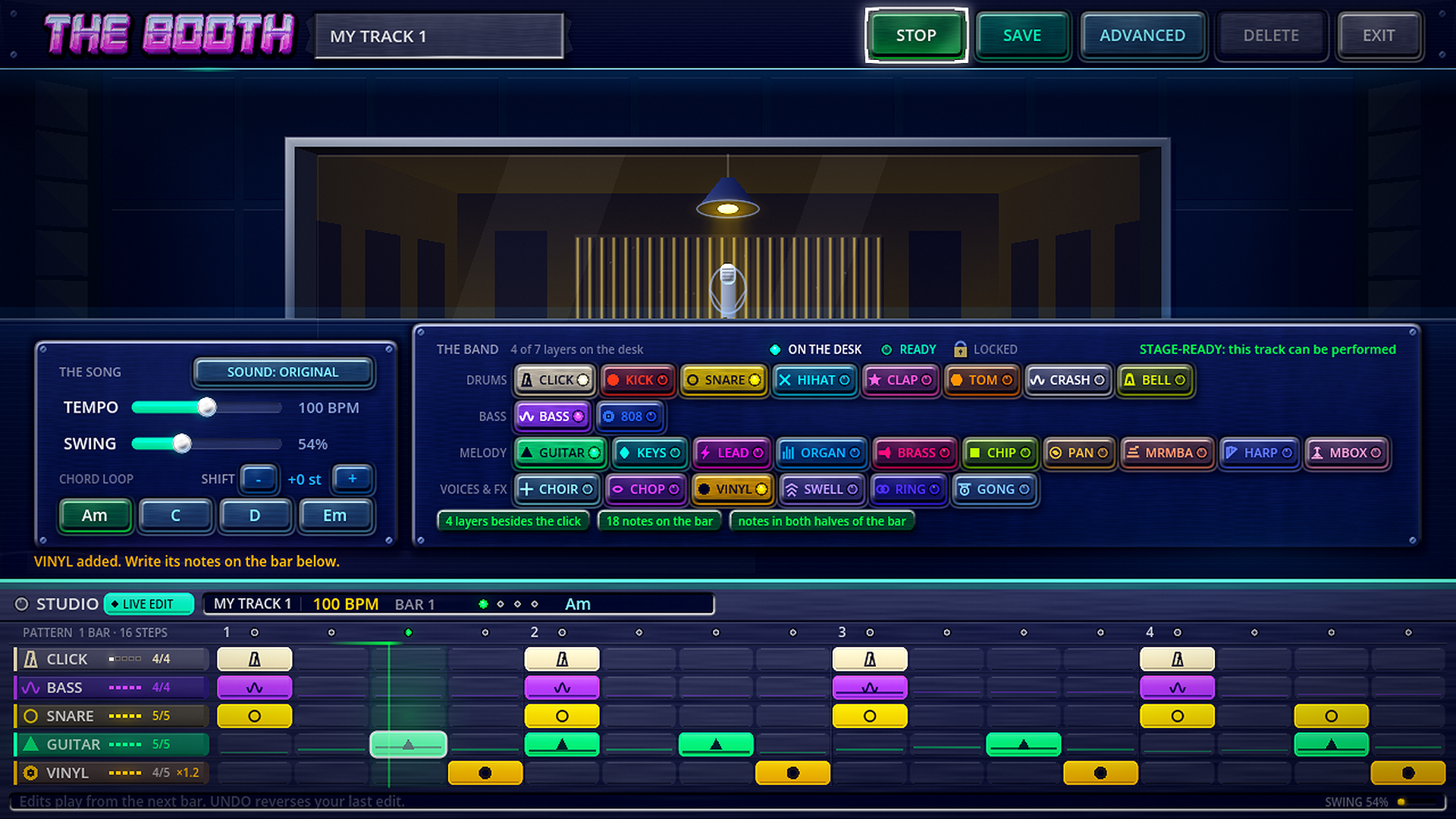
The Booth, composing mode: the world frozen, the band picked, the chord loop set, four layers written on the bar and the track stage-ready.
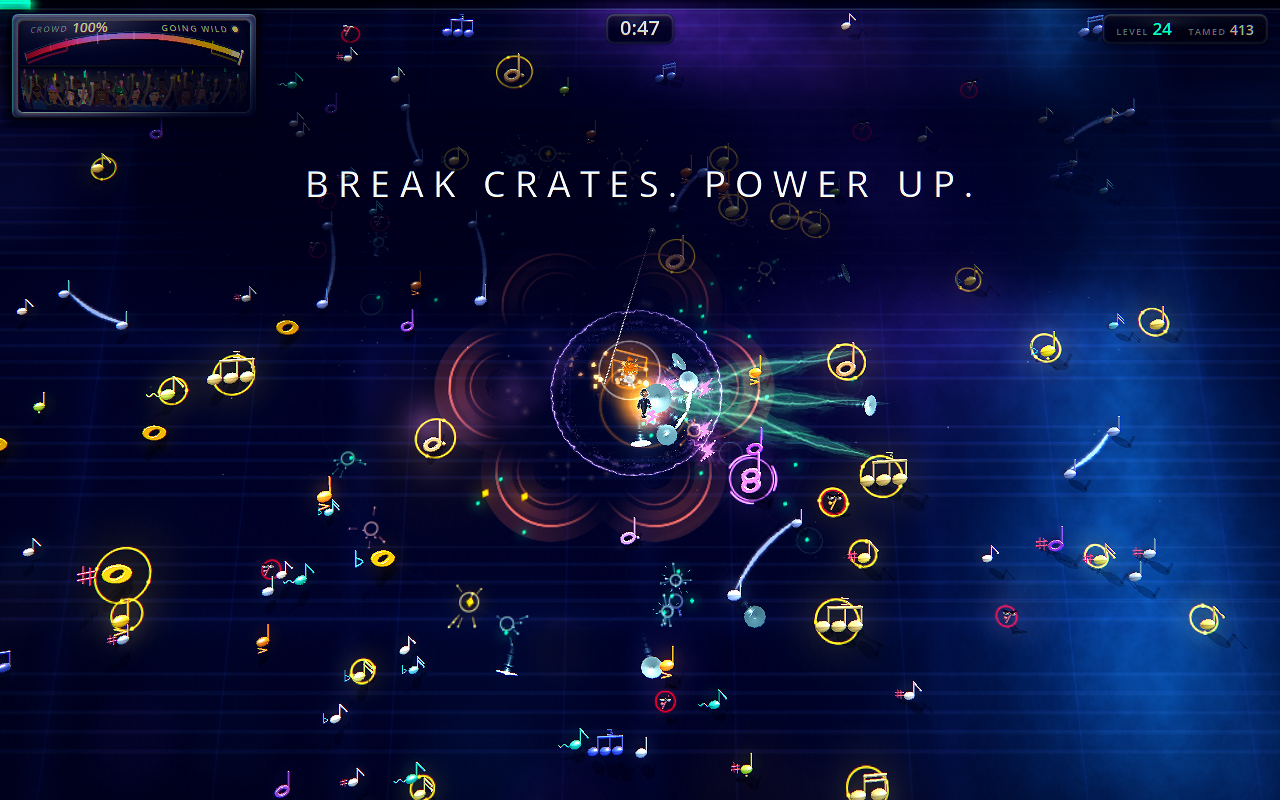
A full-band release: build HEAT, trigger THE DROP and send a knockback ring across the stage.
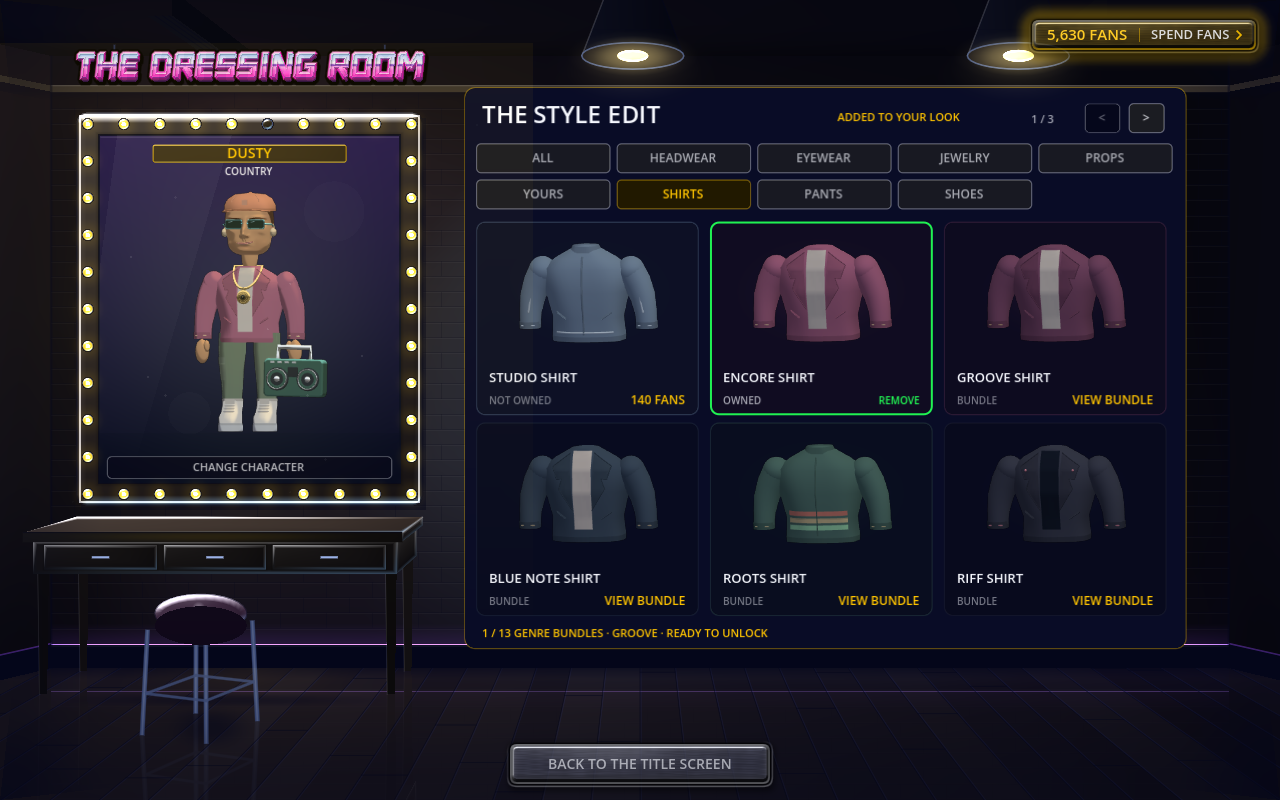
The Dressing Room’s Style Edit: try on eyewear, mix clothing and accessories, and take your outfit onto the stage.
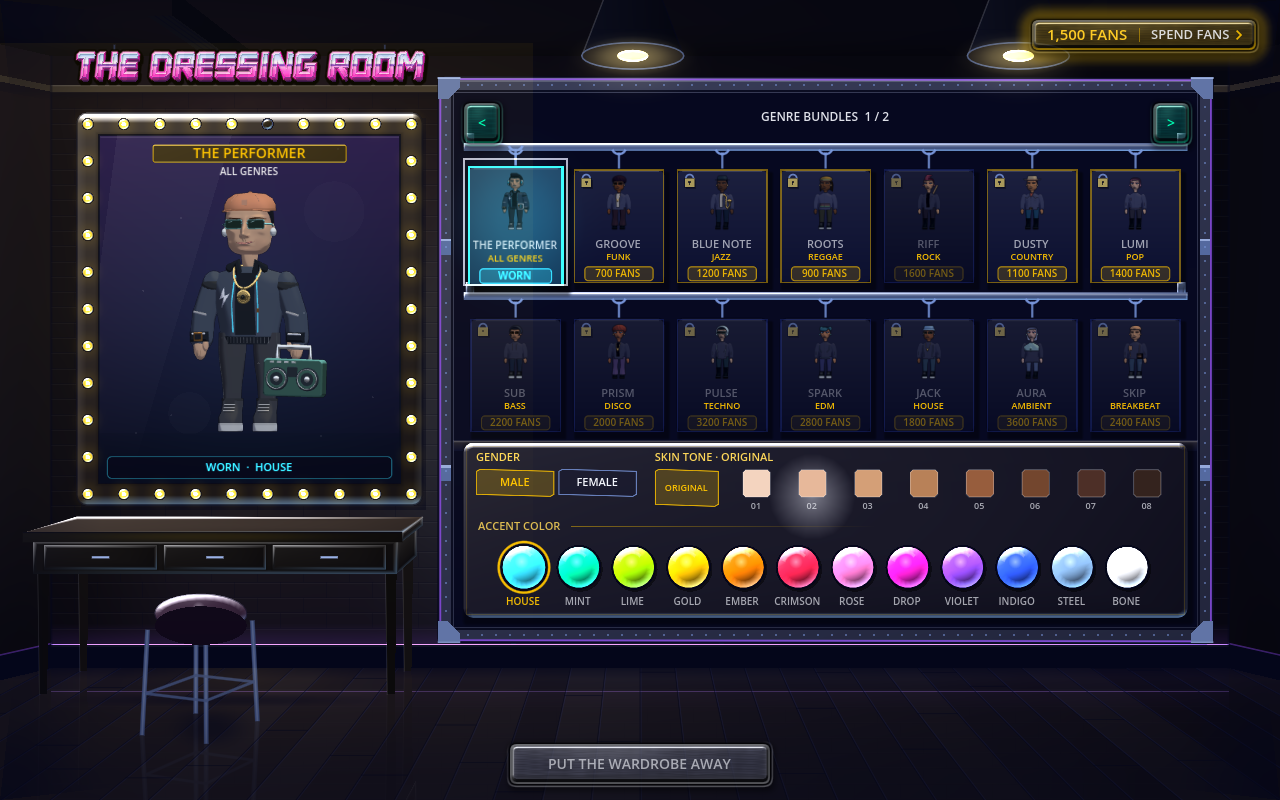
The character rail: choose your performer, appearance and accent color. Genre bundles include outfit pieces you can mix.
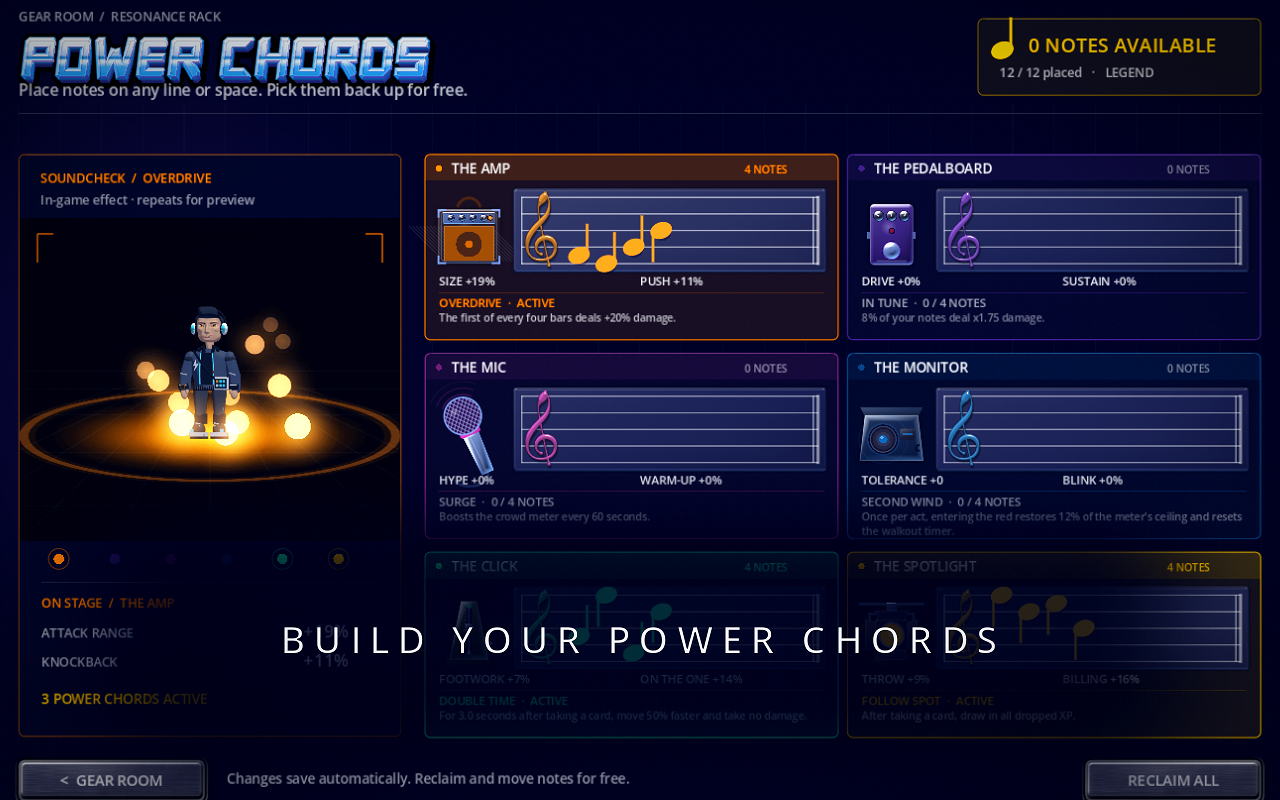
The Gear Room’s Power Chord desk, with a live ability preview and six measures for your career’s power notes.
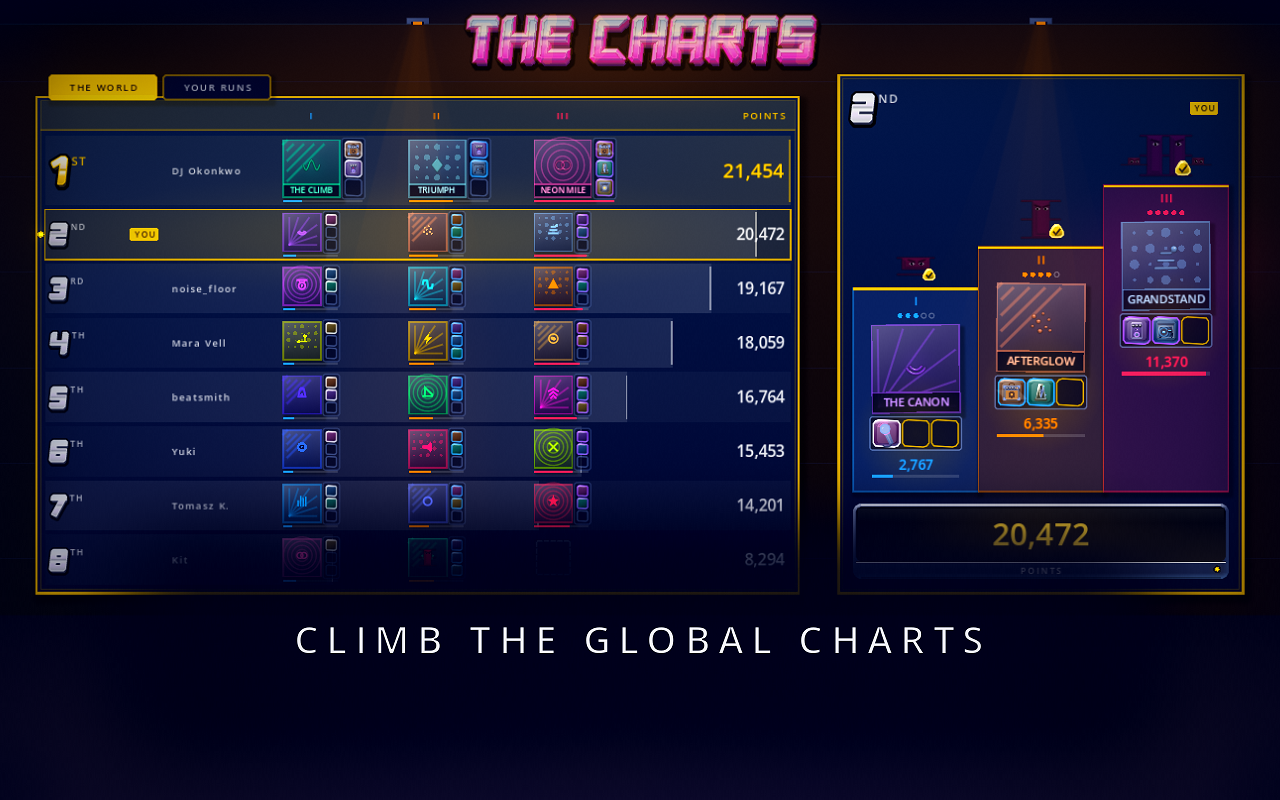
The Charts: compete on the game’s Steam leaderboards. The demo has its own board after its four completion steps.
The rooms a career is run from between nights, painted: every door, record, spine, case and hanger of which opens or wears what it says.
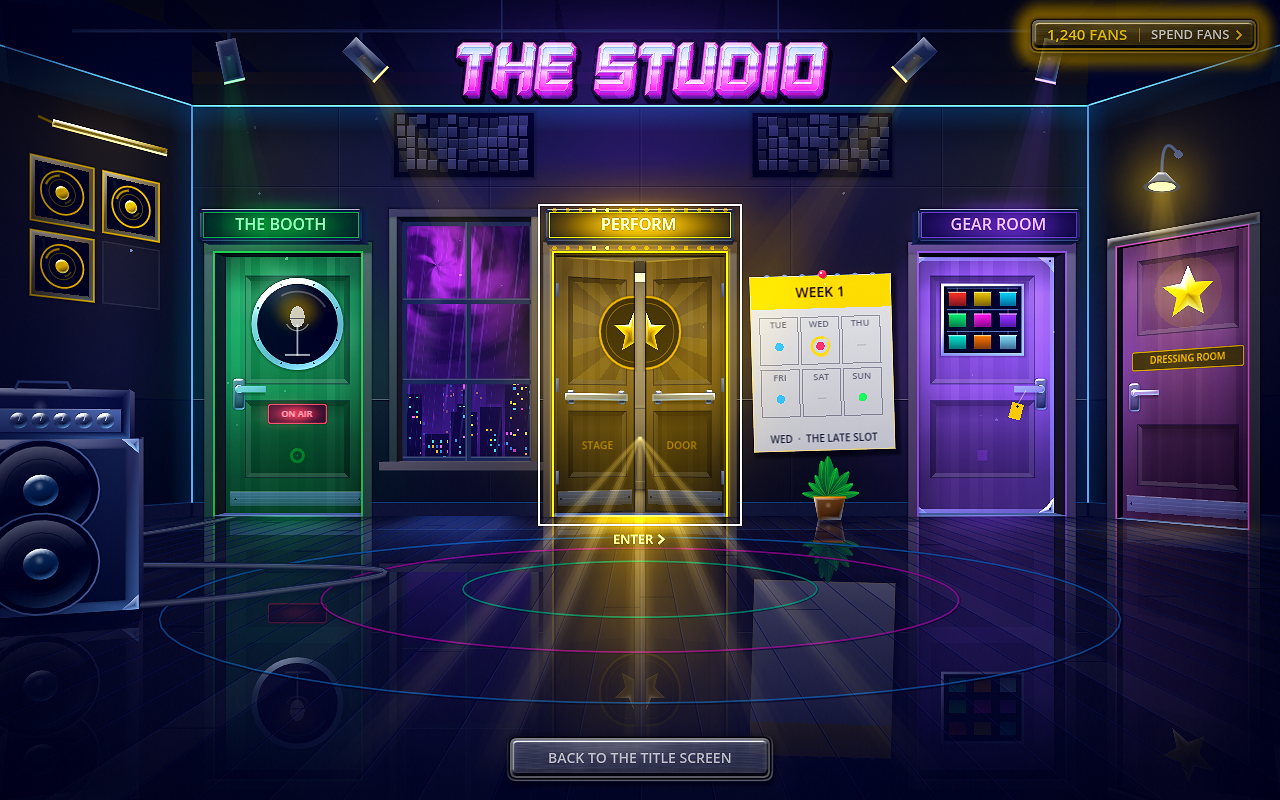
Your home between shows, with deeper rooms, stage lighting and records on the wall. Step into the Booth, Gear Room or Dressing Room, then book your next set.
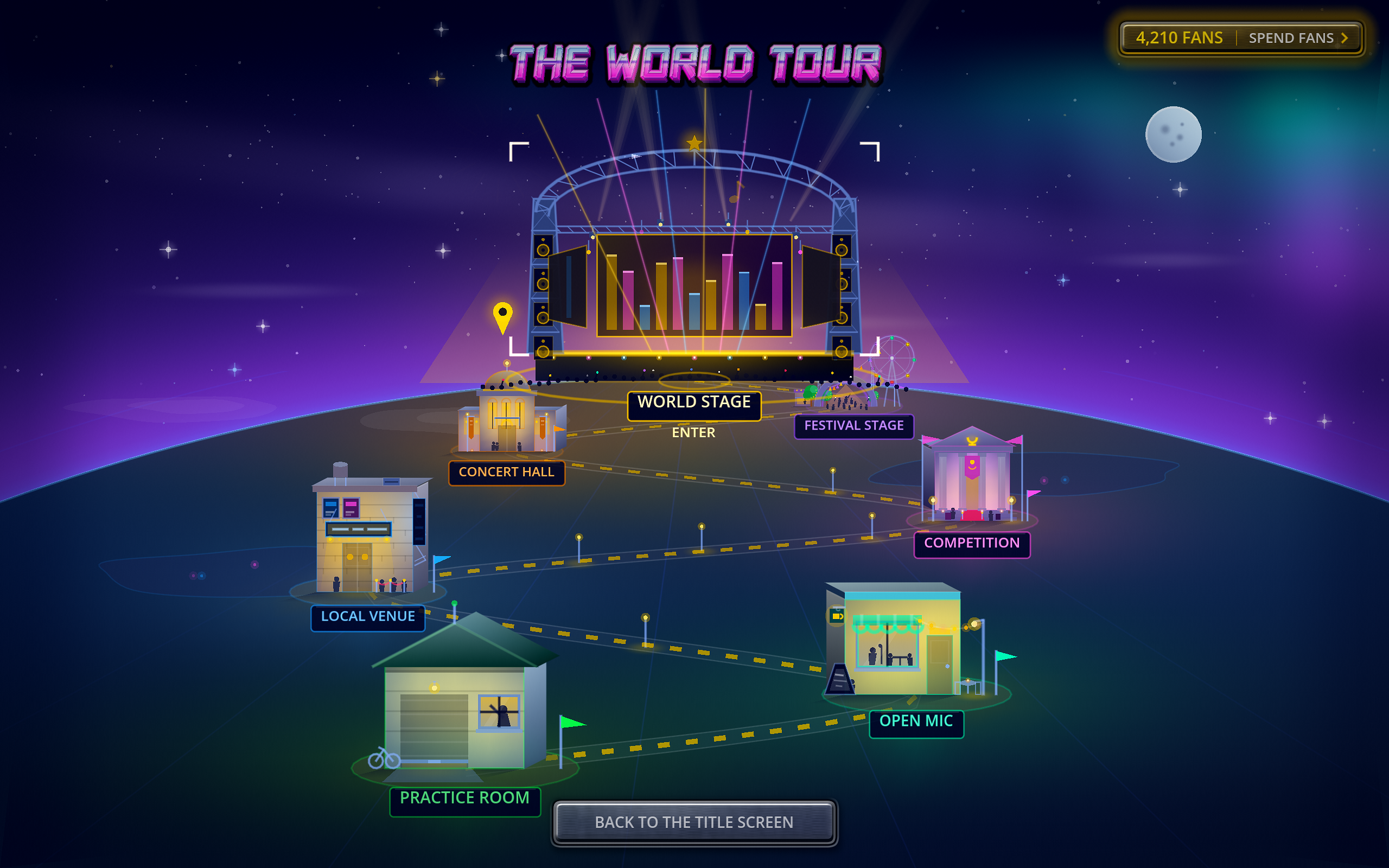
The road from the practice room to the world stage. A night that steps the career up a rung walks its results out onto the map, and the stage it earned opens its door.
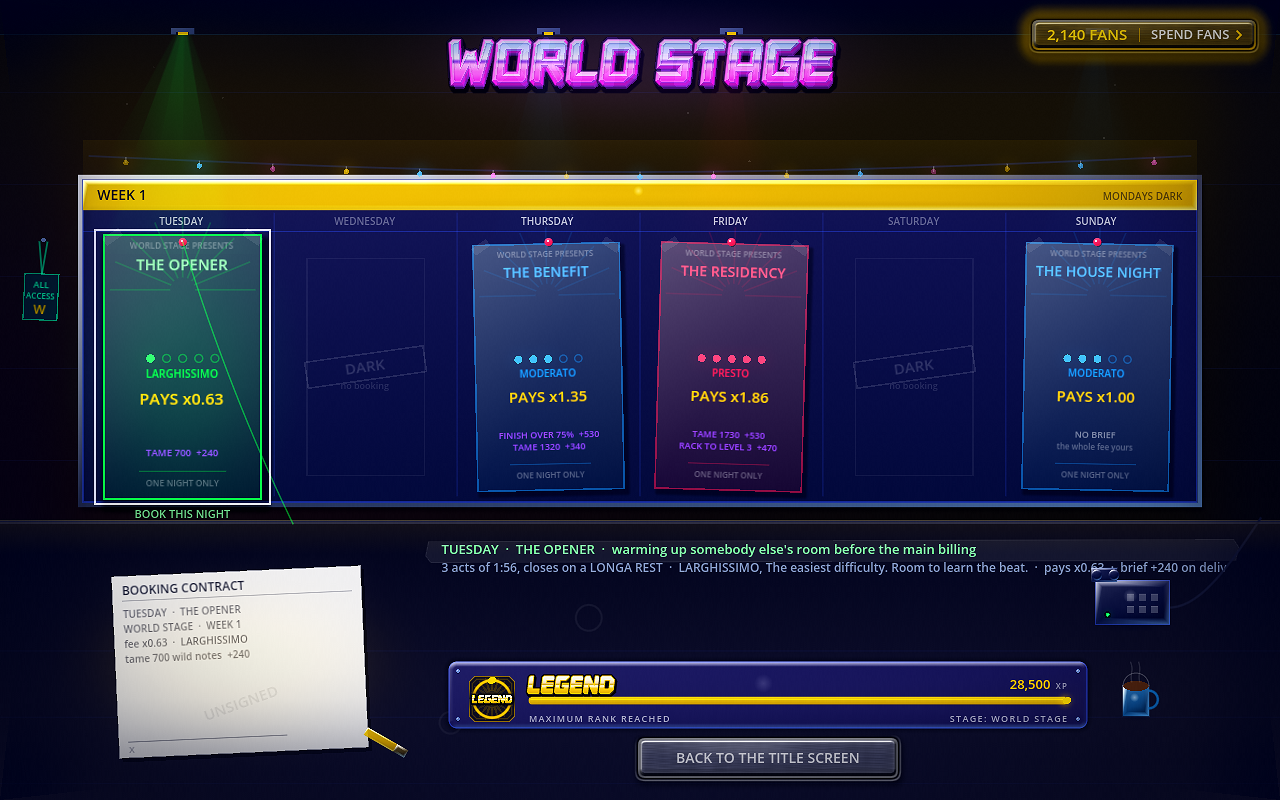
The week on the wall. Three or four nights, each with its own billing, its own brief and its own fee. Pick one and the week turns over.
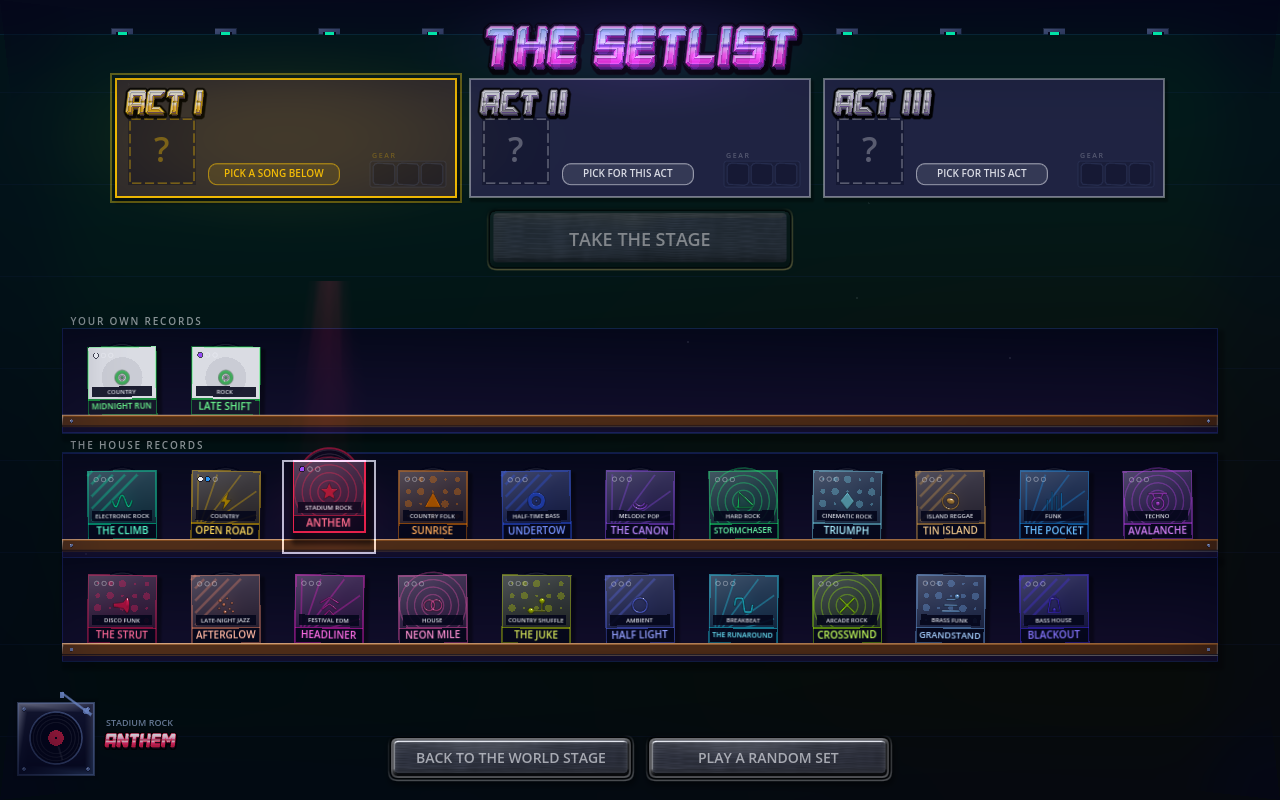
Plan a night act by act: a house song, or one of your own masters off the shelf, in the order the show will play them.
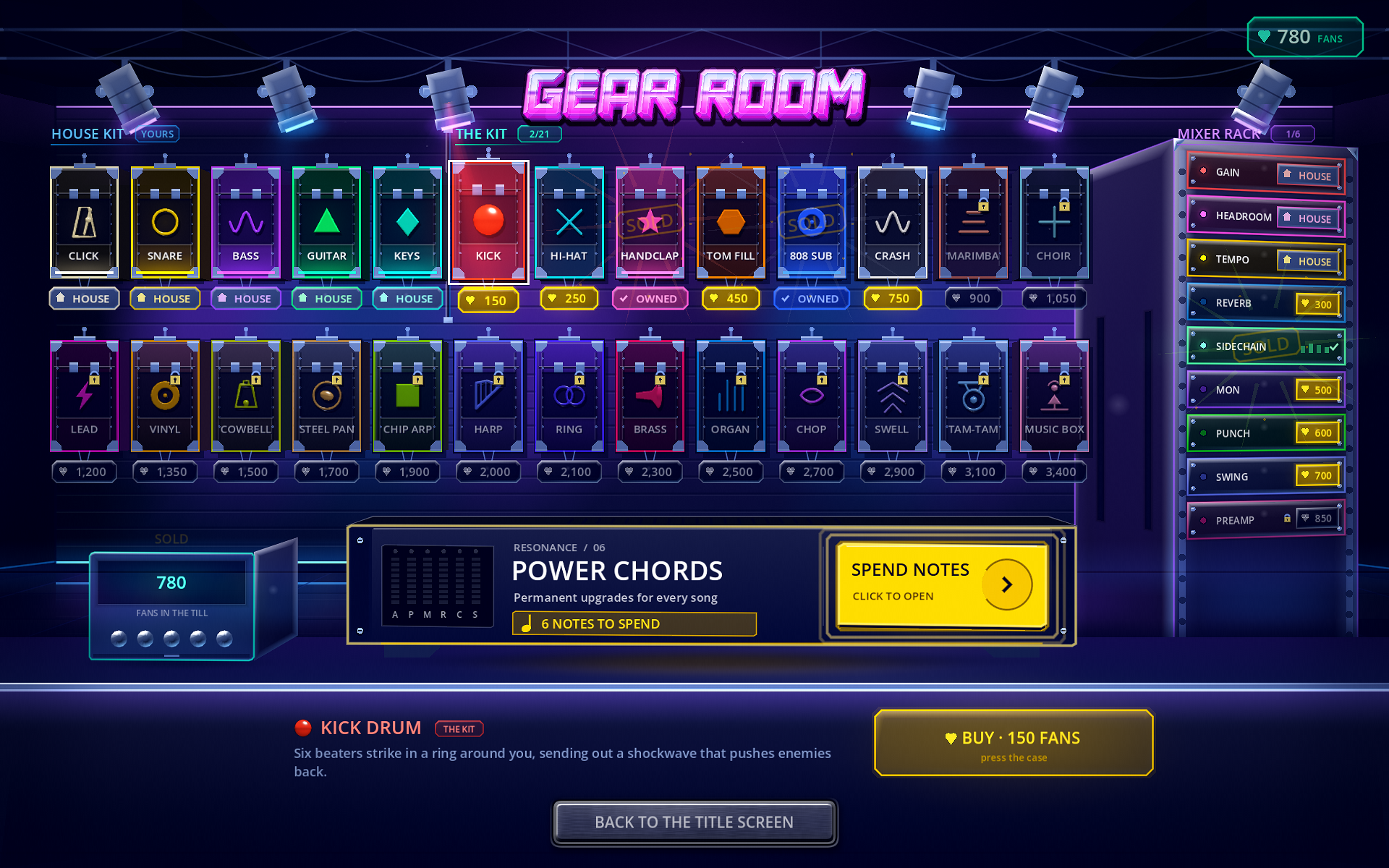
Expand your sound with instruments and mixer cards. Open the Resonance Rack to shape your Power Chords and preview abilities on your dressed performer.
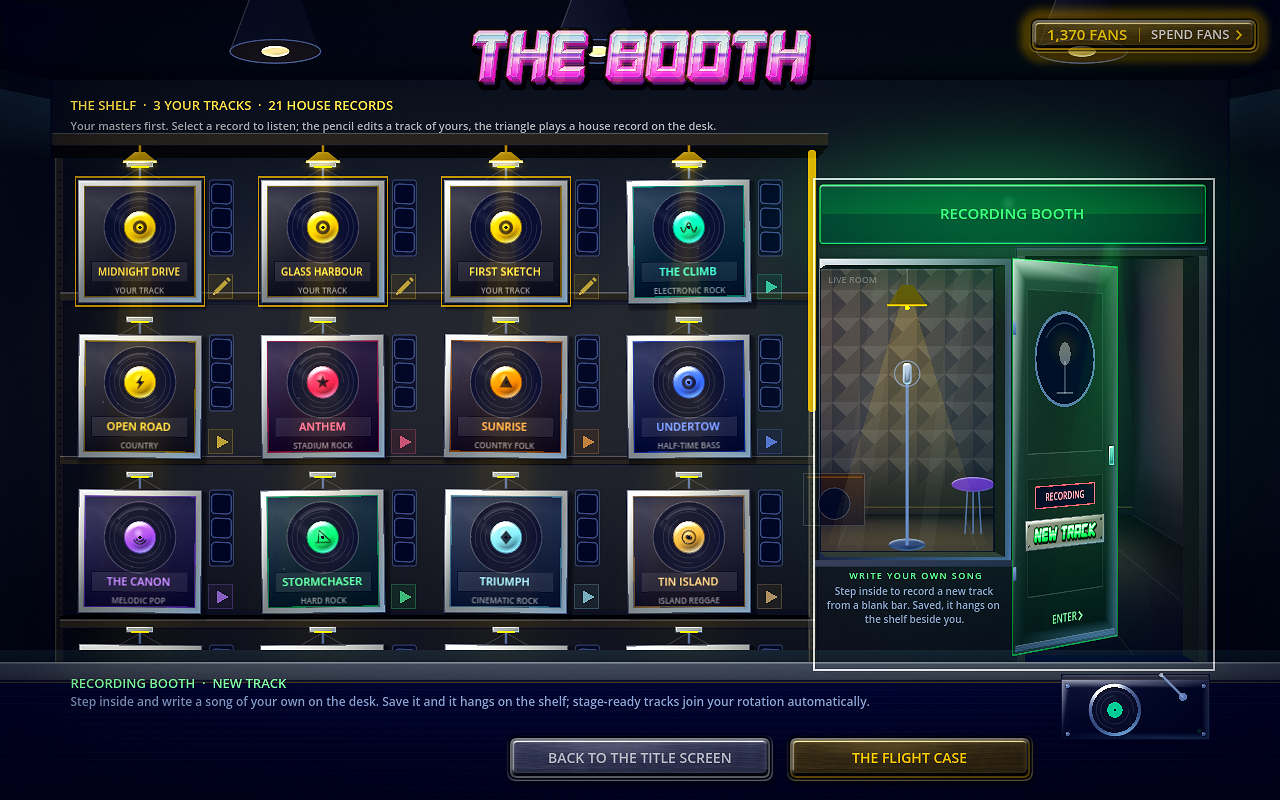
Your masters, framed. A track written in the Booth and billed for rotation becomes a song the night can call.
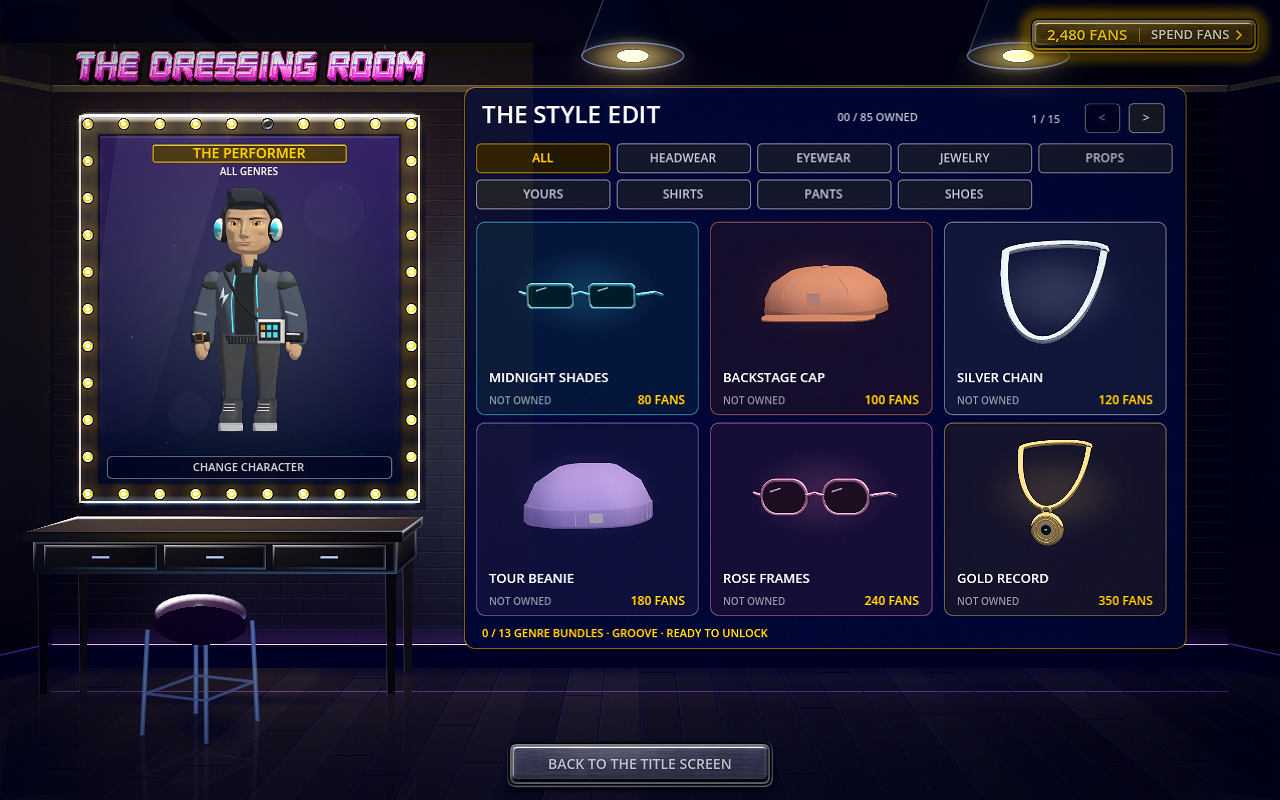
Your full-length mirror and THE STYLE EDIT. Try on a new character, mix shirts, pants, shoes and accessories, and spend earned Fans on your next stage look.
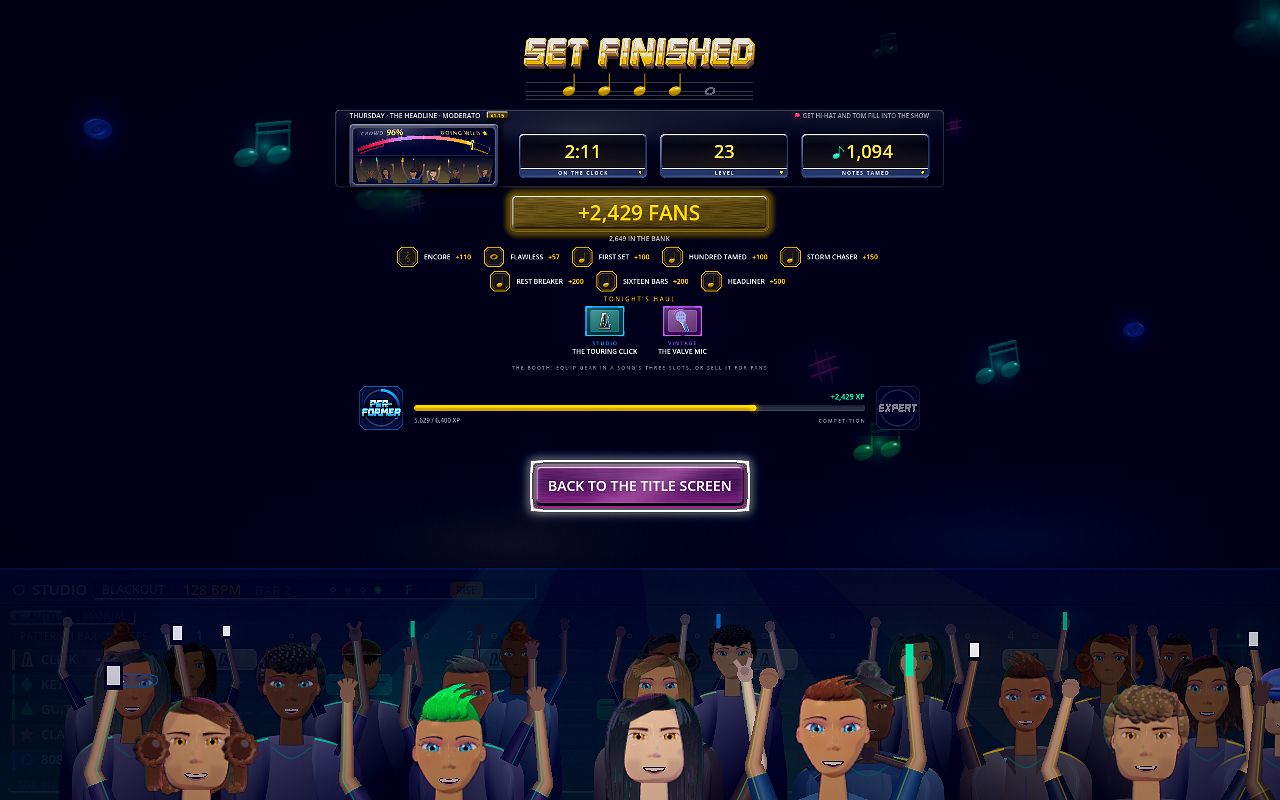
Every night ends here: the fee, the brief delivered or not, the fans, and the rung the career climbed.
Current Volt and Nova portraits, the performer wardrobe and mixable outfits. All cosmetics use earned Fans in the full game; the demo grants the performer cast and its bundle pieces to try.
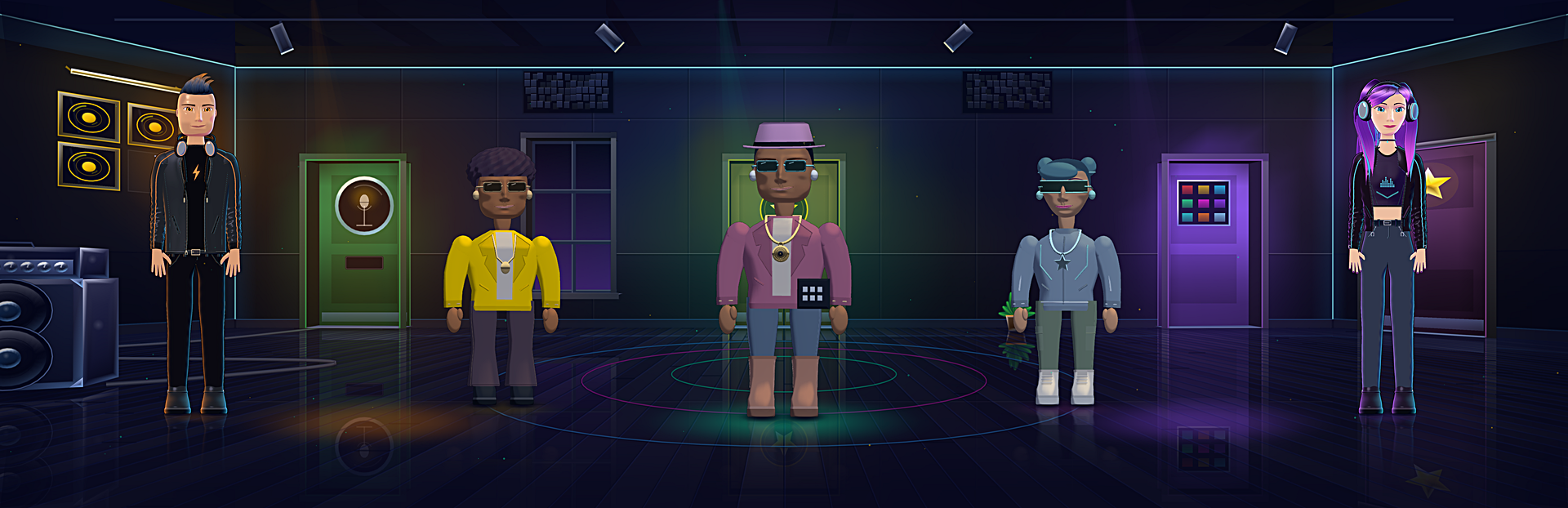
Updated hosts Volt and Nova with three dressed performers in the Studio.
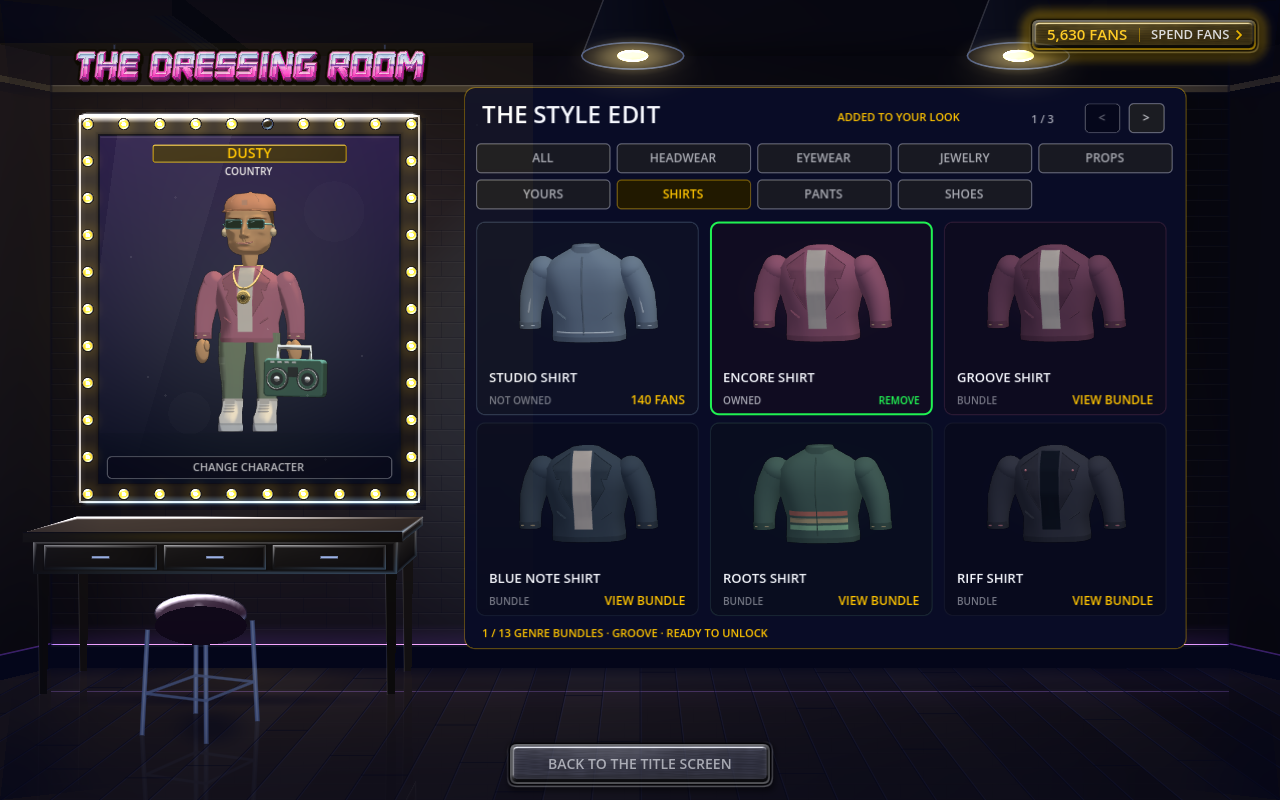
Mix clothing and accessories in the Dressing Room mirror.
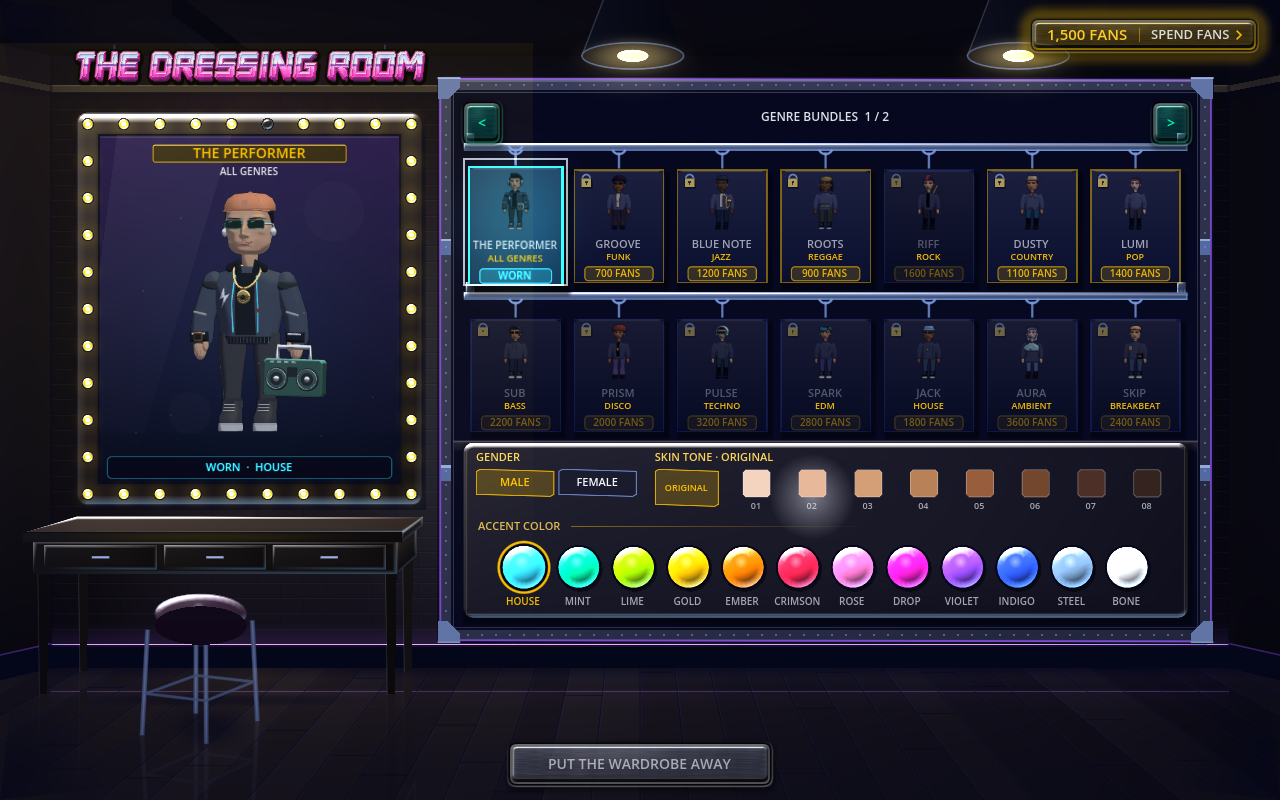
Choose a performer, appearance and accent color.
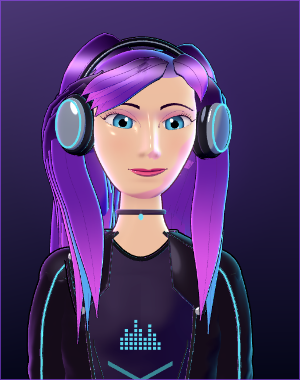
Host and backstage guide; separate from the playable performer cast.
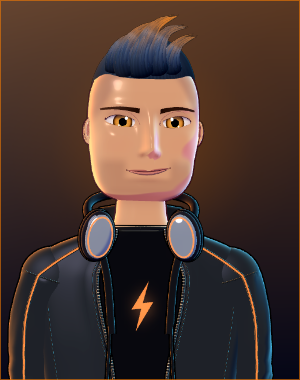
Host and backstage guide; separate from the playable performer cast.
The mark as vectors and as transparent PNG, in colour and in one ink, the icon, and a specimen of the letterform.
 Logo (SVG)the lockup, as vectors · 129 KB
The mark: ROGUESTORM over BEATS and the notes the beat throws, printed as the game prints its own sign. Scales to any size.
 Logo (PNG, 2048 px)2048 × 795 · PNG, transparent · 209 KB
The same lockup on transparency, for anywhere a vector will not go.
 Logo (PNG, 1024 px)1024 × 398 · PNG, transparent · 95 KB
The same lockup on transparency, for anywhere a vector will not go.
 Logo, one colour, white (SVG)the mark in one ink, as vectors · 11 KB
The lockup reduced to its faces in a single white, for print, a masthead or a page the coloured mark would fight.
 Logo, one colour, black (SVG)the mark in one ink, as vectors · 11 KB
The lockup reduced to its faces in a single black, for print, a masthead or a page the coloured mark would fight.
 Icon (512 px PNG)512 × 512 · PNG · 79 KB
The app icon: the poster's own icon, as the game shows it in a taskbar and a library.
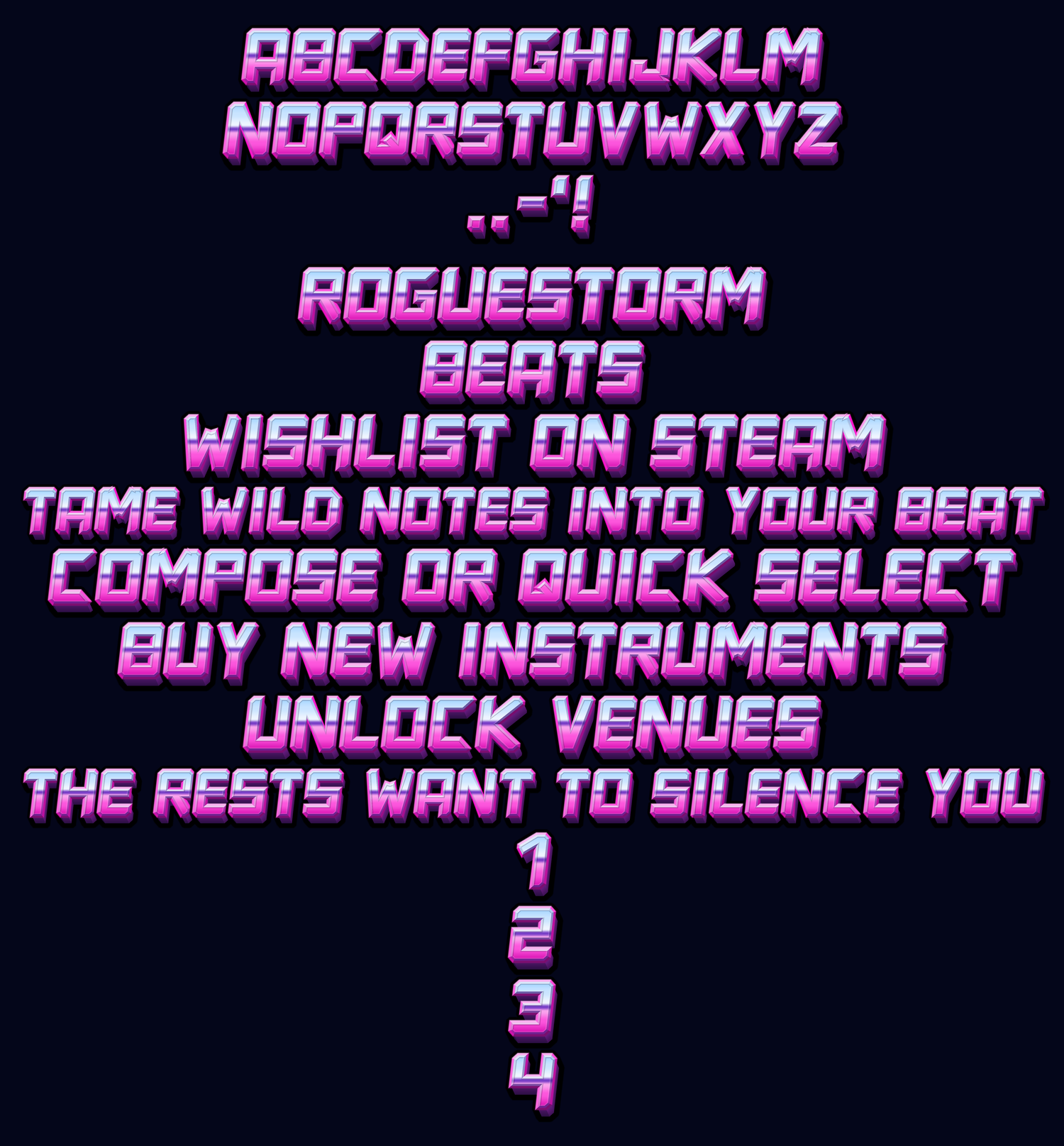
The alphabet, the punctuation and the digits in the game's own face, with the store film's chapter cards set in it. The sign is not a font: every glyph is a handful of bars clipped to a chamfered frame, and every heading in the game and on this site is set in it.
The current gameplay trailer as a file for coverage, edits and broadcasts.

The store trailer as a file, for an edit or a broadcast. The trailer's own address on the fact sheet always plays the current cut.